Oil Burner Reset Button: Once, Then Call
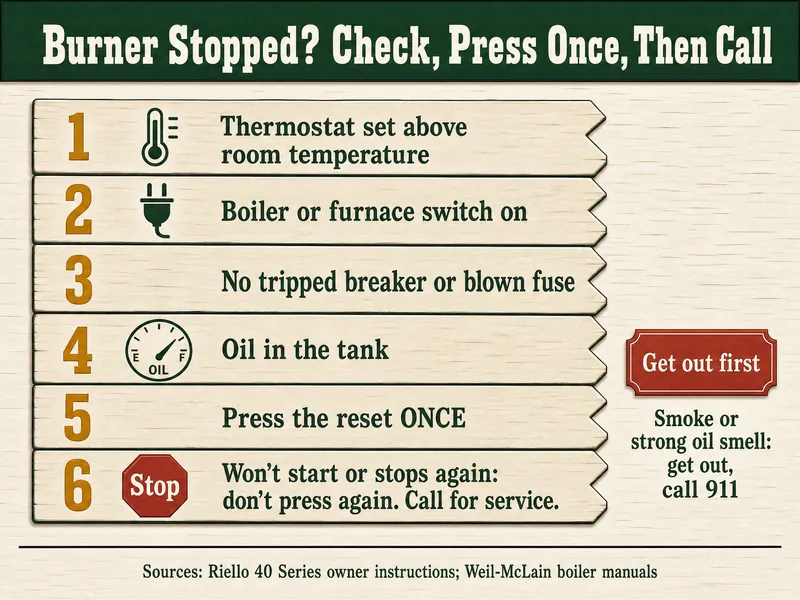
The oil burner reset button gets one press, after you've checked the thermostat, the boiler switch, the breaker and the tank; if the burner won't start or quits again, call for service.
Written by the Fill Pipe desk from state, federal and maker documents · how the pages are made · Updated
Who’s behind the links: Fill Pipe is run by the people who own Plumbing Supply and More, SoftPro Water Systems and Quality Water Treatment, and it has a working tie to Central Plumbing & HVAC. No business pays to appear here. Figures and safety steps on this page come from state energy offices and environmental agencies, federal agencies (EIA, IRS, CPSC, CDC), the propane and heating-oil industries' own safety programs, and equipment makers' manuals, read in October 2026. Fill Pipe sells no fuel and services no equipment. Owners and outbound links
First tap of the season
- Riello's owner sheet for its 40 Series burners lists four checks before anything else: thermostat, the furnace or boiler switch, fuses or breakers, and oil in the tank.
- Weil-McLain's boiler manuals say press the reset only once, because each extra press leaves oil sitting in the firebox.
- One Riello owner sheet says that if the burner shuts down a second time, or fails to run after the reset, you call your service technician.
- Newer primary controls lock out after repeated failures; Carlin's 70200 manual says only a qualified technician should reset after a latch-up.
- Beckett says a burner needs annual service by a qualified agency, with combustion test instruments.
- Smoke or soot puffing from the burner, or a CO alarm, means get everyone out and call 911 from outside; a strong oil smell alone means turn nothing on and call the service line.
When to stop and call
- The burner didn't start after one press of the reset, or it ran and then stopped again.
- You smell strong oil or exhaust, or see smoke or soot around the burner or boiler.
- The CO alarm sounds, or anyone has a headache, dizziness, nausea or confusion: everyone outside, then call 911.
- You hear a rumble or a puff from the burner when it tries to light.
- If you're unsure, stop and call your supplier or a licensed technician.
What does the oil burner reset button do?
The oil burner reset button restarts the primary control after it has shut the burner off for safety. Beckett's manual describes the control's job: when a start fails, it limits how often the burner retries, to prevent excessive accumulation of oil in the firing chamber, and repeated failures can put it into a lockout.
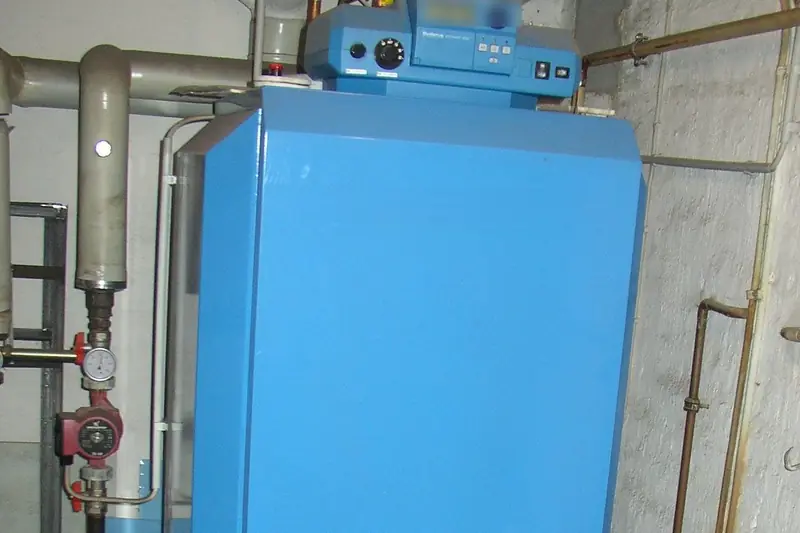
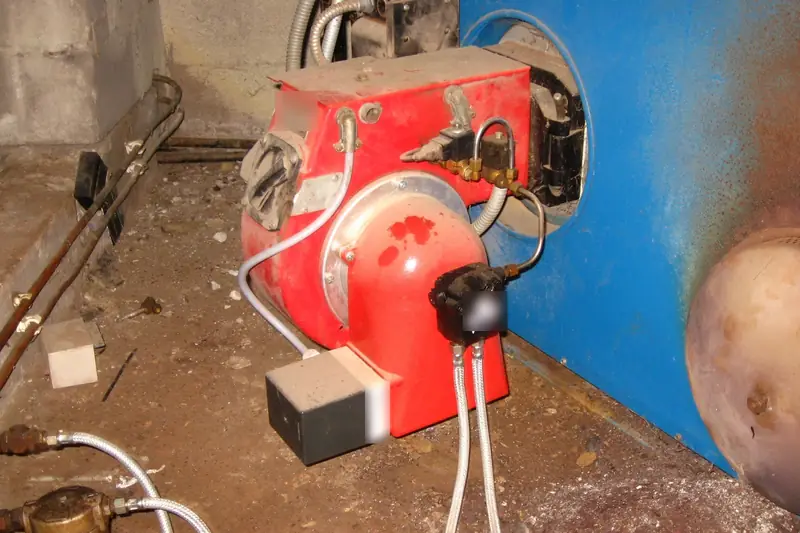
That shutdown is the control doing its job. The button sits on the primary control, usually a small box on the burner, and it's often red. On some boilers the control is under a cover, and Fill Pipe's advice there is simple: if you can't reach the button without taking anything apart, don't, and call for service. Riello's owner sheet puts it plainly: there are no owner-serviceable parts inside the burner cover.
What should you check before pressing it?
Check four things that need no tools before you touch the oil burner reset button. Riello's 40 Series owner instructions list them in this order, and Weil-McLain's Series 3 manual asks the same questions.
- Thermostat. Turn it up well above room temperature, as Riello's sheet says, and make sure the display is on.
- The boiler or furnace switch. Is it on, along with any other switch feeding the heating system?
- Breakers and fuses. Look for a tripped breaker or a blown fuse in the electrical panel.
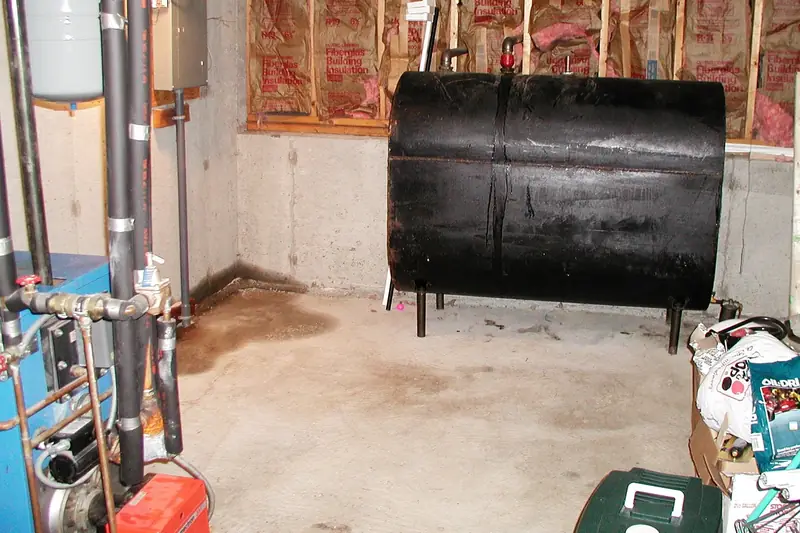
- Oil in the tank. Read the gauge on top of the tank. If it's at or near empty, the reset won't help; see what happens when you run out of heating oil.
If one of these was the problem, fix that and give the system a few minutes. The burner may start on its own once power and a call for heat return.
Why press the reset only once?
Press the reset once because every failed start can leave oil in the combustion chamber. Weil-McLain's WGO Series 4 manual says repeated presses "will deposit oil in combustion chamber," and that the burner must never be fired when oil is there.
Oil pooled in a hot firebox can light all at once when a flame finally catches. Burner makers' manuals warn against starting a burner when excess oil has built up, when the unit is full of vapor, or when the chamber is very hot. You can't see any of that from the basement stairs, which is why the rule is one press, not a few tries.
Weil-McLain and Riello's residential owner sheet both say once. Fill Pipe follows them: if one press doesn't do it, the next step is a phone call.
What if the burner stops again?
If the burner won't start after one press, or runs and then shuts down again, leave the reset alone and call your oil company's service line. Riello's owner sheet says the same: a second shutdown, or a failure to run after the reset, means call your service technician.
Many newer controls also count failures for you. Beckett's AF/AFG burner manual describes a hard lockout that "must be reset only by a qualified service technician." Carlin's 70200 control manual shows "Latch-Up" after three lockouts in one call for heat and warns that the cause must be fixed first. Clearing a lockout is a technician's job, with combustion test instruments, not a homeowner's.
While you wait, keep the house safe: no oven, grill or camp stove for heat, and if the cold is coming on fast, the tips in heat in a winter power outage apply here too.
What the manuals say
- 1press of the reset, then call (Weil-McLain WGO Series 4)Weil-McLain
- 4checks before the reset: thermostat, switch, breaker, oilRiello 40 Series
- 3lockouts in one call for heat before a Carlin 70200 latches upCarlin Combustion
- 1professional burner service a yearBeckett
What should you tell the service tech?
Tell the service tech what you checked, what the burner did, and whether you pressed the reset. A clear account saves time on a cold night and helps the technician judge whether oil may be sitting in the chamber.
What to tell the service tech
What you checked
Thermostat setting, the boiler or furnace switch, the breaker, and the tank gauge reading, with the number you saw.
Whether you pressed the reset
Say once, twice or not at all. Be honest; it changes how the technician starts the burner.
What you saw and heard
Lights on the control, any blinking pattern, a hum with no flame, a rumble, smoke, soot or an oil smell.
When it last ran
The last time you had heat or hot water, the last delivery date, and the last annual service.
Your service records matter as well. If the burner hasn't had its yearly oil furnace and boiler service, say so; Weil-McLain's annual checklist has the technician change the nozzle and clean or change the fuel filter and strainer at that visit.
| Task | Homeowner | Service technician | Source |
|---|---|---|---|
| Thermostat, switch, breaker and tank gauge check | Yes | Yes | Riello 40 Series owner sheet |
| Press the reset button | Once, at most | Yes | Weil-McLain WGO Series 4 |
| Clear a hard lockout or latch-up | No | Yes | Beckett AF/AFG; Carlin 70200 |
| Bleed or prime the oil pump | No | Yes (in Maine, also a trained delivery driver) | 32 M.R.S. § 18134-A |
| Adjust combustion with test instruments | No | Yes | Beckett AF/AFG |
When is it an emergency?
A carbon monoxide alarm, or anyone with a headache, dizziness or nausea, means everyone outside now, then call 911 from outside. Smoke or soot puffing from the burner means the same: get out, call 911, then your oil company. A strong oil or exhaust smell with no smoke and no alarm means turn nothing on and call your oil company's service line right away.
CO from an oil burner has no smell. The CPSC carbon monoxide safety page lists headache, fatigue, shortness of breath, nausea and dizziness as early signs, and says not to go back inside until responders give permission. CO alarms belong on every level, including the basement, and outside each sleeping area; NFPA also recommends one in each bedroom. The full rundown is on the carbon monoxide page, and smells get their own page at oil smell in the house.
Which parts will the technician look at?
A technician working on a burner that keeps locking out usually checks the nozzle, the oil filter, the pump and the electrodes, then sets combustion with instruments. Beckett's manual lists those items in its maintenance checklist, along with the cad cell that tells the control whether there's a flame.
Those are a technician's parts, not a homeowner project. The listing below shows what oil burner parts look like, so the names on the service ticket make sense; the technician specifies the exact match for your burner.
Scaler's notes: how this page was put together
This page is based on owner and technician instructions from Riello (40 Series owner instructions), Weil-McLain (Series 3 and WGO Series 4 boiler manuals), Beckett (AF/AFG burner manual) and Carlin (70200 primary control), the CPSC carbon monoxide safety page, and Maine's Fuel Board statute (32 M.R.S. ch. 139), all read October 2026. Manuals are model-specific, so the page states only what the owner sections agree on. Left out on purpose: lockout reset procedures, timing for holding a button, cover removal, pump bleeding and nozzle work, which are technician tasks. Forum troubleshooting threads were not used.
Questions from the woodshed
Where is the reset button on an oil furnace?
It's on the burner's primary control, a small box mounted on or beside the burner at the front of the furnace or boiler. If you'd have to take a cover off to reach it, leave it and call for service.
Is it normal to press the reset every few days to get heat?
No. Riello's owner sheet treats a second shutdown as a reason to call your service technician, and Beckett says a burner that doesn't appear to be operating properly calls for your service agency. Don't make the reset a habit.
Can pressing the reset too many times cause damage?
Yes. Weil-McLain's manual warns that extra presses leave oil where the flame lights, and burner makers warn against starting a burner with excess oil or vapor in it. That's the reason for the one-press rule.
The control light is blinking. What does it mean?
Some newer controls flash a code that a technician reads with the maker's manual. Note the pattern and color and pass it on when you call; don't try to clear it.
Why won't the burner start even after an oil delivery?
A tank that ran dry leaves the burner needing priming by a service tech, or in Maine by a driver who has taken the Fuel Board's approved course. Either way it's a service call, not more presses of the button.
Does the reset button also restart the hot water?
When the boiler also makes your tap hot water, the same burner heats it, so no burner means no hot water. The check-then-one-press rule is the same.
Should the oil burner be turned off while waiting for service?
If the burner has locked out it isn't firing anyway, so leave the switch and the reset alone. If smoke is spreading or the CO alarm sounds, don't stop for any switch: get everyone out and call 911 from outside. For an oil smell without smoke, call your oil company's service line.
More on oil heat