Propane Smell in the House: Get Out First
Propane smell in the house? Get everyone outside now, touch no switches, phones or flames on the way, and call 911, then your propane supplier, from well away.
Written by the Fill Pipe desk from state, federal and maker documents · how the pages are made · Updated

Smell propane? Do this now
- Get everyone out of the house right away. Don't stop to pack or search.
- Don't flip light switches, use phones, light anything, run appliances, start a car or use a garage door opener inside.
- Don't look for the leak, and don't go to the propane tank.
- From outside and well away, call 911, then your propane supplier.
- Stay out until responders or your supplier say it's safe to go back in.
- If you're unsure, stop and call your supplier or a licensed technician.
First tap of the season
- The propane industry's safety council (PERC) lists its first step as "GET AWAY IMMEDIATELY" in its propane safety booklet (2025).
- PERC says don't turn any light switches on or off, and don't touch appliances, outlets or landline phones while leaving.
- NFPA's 2026 safety messages give the same order: leave the building, then call 9-1-1 and the gas company.
- Propane is heavier than air, so PERC warns it may settle near the floor, in a basement or other low spot.
- PERC names three ways your nose can miss a leak: odor fatigue, other strong smells masking it, and odorant absorbed by soil, water or rust.
- NFPA says propane alarms belong within 18 inches of the floor and 3 to 10 feet from gas appliances.
What should you do if you smell propane in the house?
Leave. Get every person out of the house at once, and make your calls only after you're outside and well away. PERC's booklet sets out three steps in order: get away immediately, avoid creating sparks on the way out, and once safely away, call. NFPA's educational messages put it in one line: "Leave the building immediately and call 9-1-1 and the gas company."
Treat a smell you can't place as a leak. PERC's own wording is that a bad odor from an unknown source "may be a gas leak. Take action". You don't have to be sure before you leave and call.
Gather people, not belongings. If a phone is already in your hand, carry it out, but don't dial until you're well clear of the building.
What does propane smell like?
Propane is given a smell on purpose. PERC says "a unique odor is added to propane to help alert people to a leak." PERC doesn't compare it to anything, so if you've never smelled it, ask your supplier on a routine visit what to expect.
Your nose can let you down in three ways, according to the PERC booklet. Odor fatigue sets in when the smell hangs around long enough that you stop noticing it. Cooking, smoke, or a musty, damp cellar can mask it. The odorant can also be absorbed by soil, water or rust, which PERC calls odor loss.
Other clues count too. PERC says a hissing sound near your propane system or an appliance may mean gas is escaping, and using more gas than you expect may point to a leak. Because propane is heavier than air, a basement or crawlspace is where it tends to collect.
What should you never do inside?
Make no spark and no flame. PERC is blunt about it: don't turn any light switches on or off; don't interact with appliances, outlets or landline phones; no smoking, vaping or open flames. Fill Pipe adds a few that catch people out in a northern winter: don't start a car in an attached garage, don't run the garage door opener, and don't make a cell phone call until you're out.
Don't go hunting for the source; it keeps you inside longer.
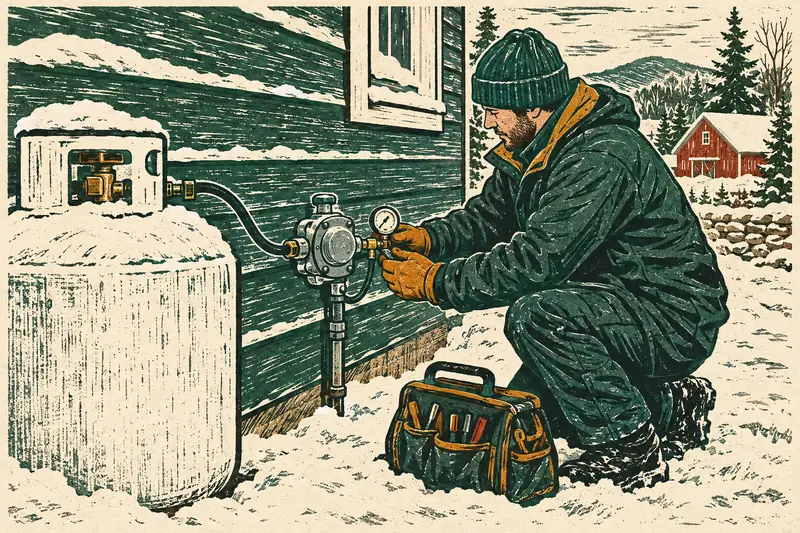
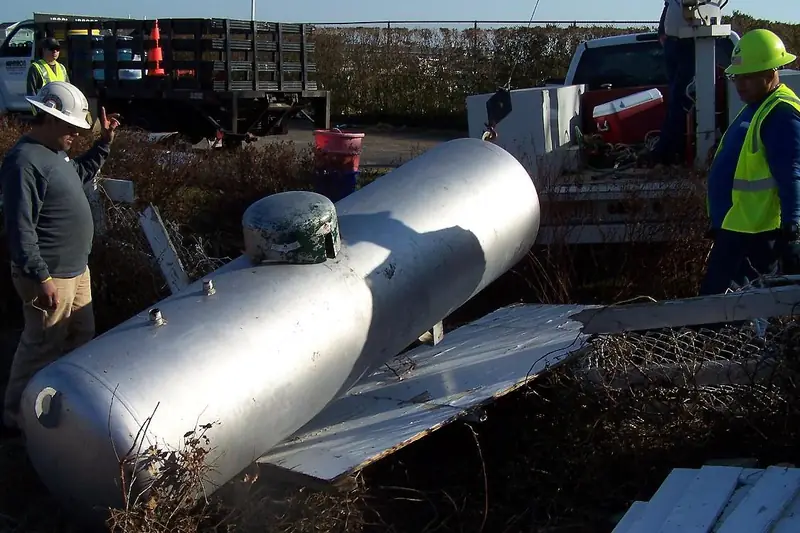
Don't go to the tank. During a suspected leak, the tank and its valves are for your propane supplier or the responders. On a calm day, PERC suggests asking your supplier for a visit to learn what's "under the dome" on the tank; that's the time to see the equipment, not during an emergency.
Who do you call, and from where?
From outside and well away from the house, call 911 first, then your propane supplier. PERC lists "your propane retailer, 911, or the fire department", and NFPA says 9-1-1 and the gas company; Fill Pipe's order puts 911 first so responders are on the way whatever the hour.
Save your supplier's after-hours line in your phone before the heating season. If you rent or have just moved in, find the supplier's name on a bill or delivery slip, or ask your landlord, before you need it.
What happens after the call?
You wait outside until someone qualified gives the all-clear. PERC says to stay away "until your propane retailer, emergency responder, or qualified professional determines that it is safe to return." Responders may shut the gas off; that's their call.
Before any propane appliance runs again, PERC says to have your entire propane system checked for leaks by your propane retailer or a qualified professional. If the gas was shut off, the same rule applies as after a run-out: "A qualified professional must check the propane system for leaks when turning the gas on. Never turn the gas on at the propane tank yourself." The ran out of propane page covers that leak check, and propane tank inspection explains what the supplier looks at.
Leave pilots to your propane supplier or a qualified technician. In Vermont, the Division of Fire Safety says everyone doing inspection, installation and service of propane systems must be certified, and in Maine the law requires a Fuel Board license to install or service propane equipment (owner-occupied single-family homes have a narrow exception, and that work must still meet the Board's rules). Hire the licensed technician.
| Sign | What it can mean | What to do |
|---|---|---|
| Odor inside the house | Gas may be leaking | Get out, then call 911 and the supplier from well away |
| Hissing near piping or an appliance | Gas escaping from a component | Get out and call from outside |
| Propane alarm sounding | Gas detected, even with no smell | Don't walk toward the alarm; leave |
| Smell faded after a while | Odor fatigue, not a fixed leak | Still treat it as a leak |
| Using more gas than expected | Possible leak somewhere | Ask the supplier for a leak check |
Do propane detectors help?
Yes, as a second line behind your nose. PERC says "propane gas detectors can identify leaks you do not smell," and adds that you should never ignore the smell of propane even if the detectors stay quiet. If one sounds, PERC says not to go toward it: treat it as an emergency and act at once, smell or no smell.
Placement matters because propane sinks. NFPA says to choose an alarm listed by a recognized testing lab, mount it within 18 inches of the floor, and keep it 3 to 10 feet from gas appliances such as the furnace, water heater, range and dryer. NFPA notes these alarms beep about once per second when they alert. Kidde puts it simply: propane sinks, so place the alarm near where it collects.
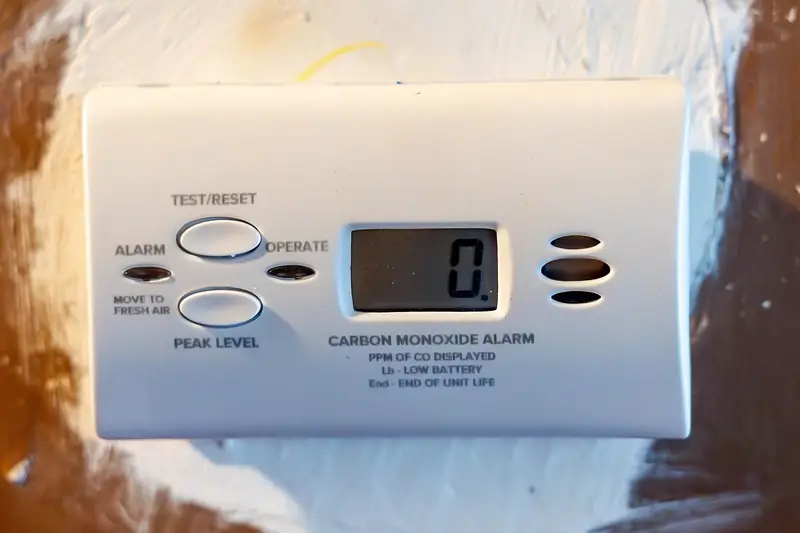
A propane alarm is not a CO alarm. PERC points out that the two are different devices, though some combination units exist. You still need the carbon monoxide alarms described on the carbon monoxide page.
Board feet: the numbers
- 18 inhighest an LP-gas alarm should sit above the floorNFPA
- 3–10 ftdistance a fuel gas alarm keeps from gas appliancesNFPA
- 1 per secondbeep rate of a fuel gas alarm when it alertsNFPA
- 3ways PERC says the odor can be missed: fatigue, masking, odor lossPERC
Scaler's notes: how this page was put together
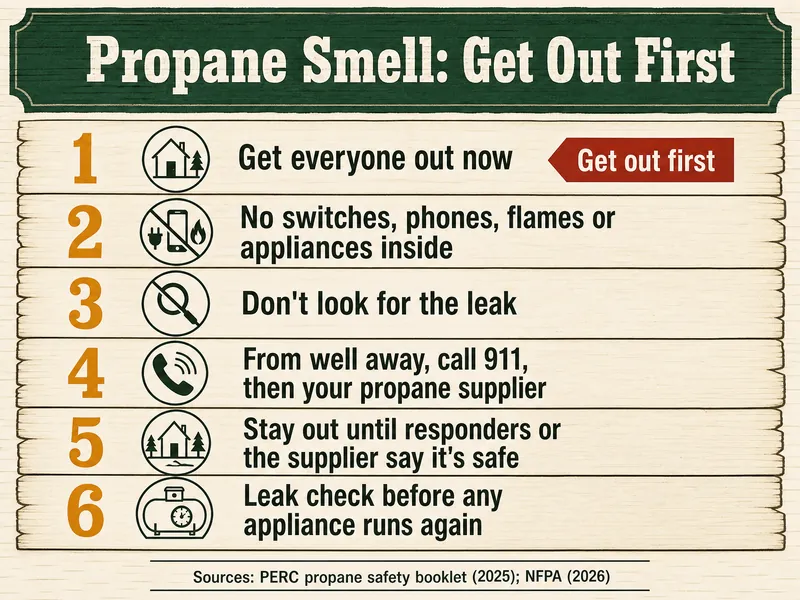
This page is based on the Propane Education & Research Council's booklet for propane users (PRC-101063D, 2025), NFPA's Educational Messages Desk Reference (2026), a Kidde propane-and-CO alarm product page, the Vermont Division of Fire Safety's gas certification page and Maine's Fuel Board licensing statute, all read in October 2026. Left out on purpose: any step at the tank or its valves, pilot-lighting steps, outdoor tank clearance distances, and comparisons of the odor that PERC itself doesn't make.
Questions from the woodshed
Should you turn off the propane at the tank when you smell gas?
No. Get out and call from well away. During a suspected leak the tank and its valves are for your supplier or the responders, and walking to the tank keeps you near the gas. Ask your supplier to show you the equipment on a calm, routine visit instead.
What if the propane smell is outside near the tank?
Move everyone away from the tank and the house, then call 911 and your supplier from a safe distance. Don't try to work out which fitting is leaking. Keep people and cars away until responders arrive.
Why did the smell go away after a few minutes?
Often it's odor fatigue: PERC says your nose can tire of a smell that hangs around and stop noticing it. A fading smell doesn't mean the leak stopped. Leave and call anyway.
Can I go back in once the smell is gone?
Not until a responder, your propane supplier or a qualified professional says it's safe. PERC also says the whole propane system should be leak-checked before any appliance is used again.
Will my carbon monoxide alarm warn me about a propane leak?
A CO-only alarm won't. PERC says propane detectors and CO detectors are different devices, though combination units exist. A home with propane heat benefits from both, each mounted where its gas collects.
Who relights the pilots after a leak?
Your propane supplier or a qualified technician, after the leak check. Fill Pipe never gives relighting steps, and PERC says a pilot that's hard to light or keeps going out needs a qualified professional.
Is it safe to call 911 from my cell phone on the porch?
Get farther away than the porch first. Walk to the road, a neighbor's house or the far side of the yard, then call. The aim is distance between you and any gas before anything electrical is used.
More on propane and safety