Heat in a Winter Power Outage
Power outage heat is the catch with oil and propane: furnaces and boilers need electricity to run, so plan for a generator used safely outdoors, pipes kept from freezing, and a warm place to go.
Written by the Fill Pipe desk from state, federal and maker documents · how the pages are made · Updated
Who’s behind the links: Fill Pipe is run by the people who own Plumbing Supply and More, SoftPro Water Systems and Quality Water Treatment, and it has a working tie to Central Plumbing & HVAC. No business pays to appear here. Figures and safety steps on this page come from state energy offices and environmental agencies, federal agencies (EIA, IRS, CPSC, CDC), the propane and heating-oil industries' own safety programs, and equipment makers' manuals, read in October 2026. Fill Pipe sells no fuel and services no equipment. Owners and outbound links
Outage dangers: stop and get out
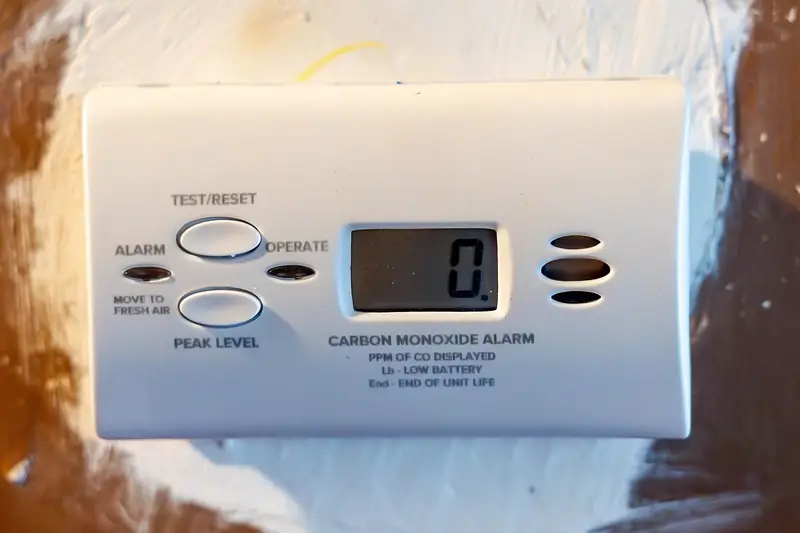
- A CO alarm sounds, or anyone gets a headache, dizziness or nausea: everyone outside, then call 911.
- Never run a generator in the house, basement, garage, crawlspace, shed or on a porch, even with doors open.
- Never heat with an oven, range, grill, camp stove or an outdoor heater indoors.
- Never plug a generator into a wall outlet to power the house.
- You smell propane when the power comes back: get out and call 911, then your supplier, from well away.
- If you're unsure, stop and call your supplier or a licensed technician.
First tap of the season
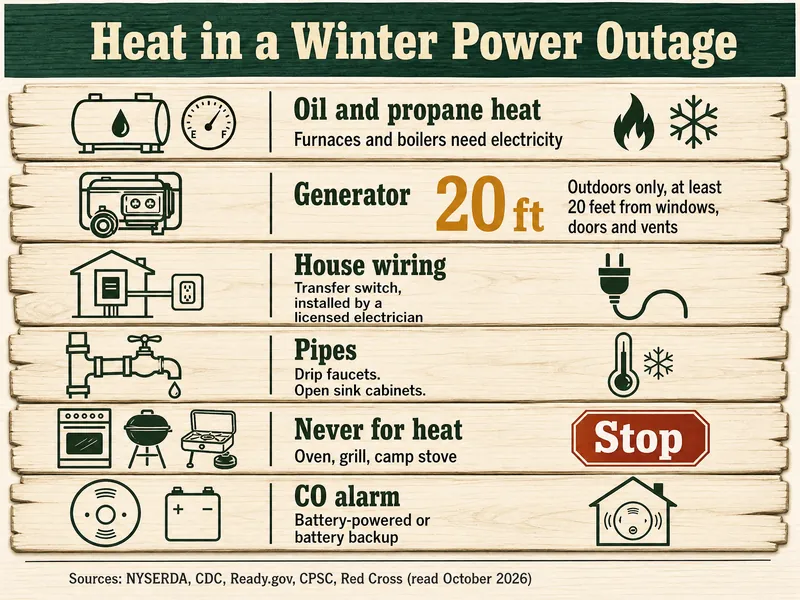
- NYS Clean Heat says furnaces, boilers and most common heating systems need electricity, so "when the power goes out, none of them will work."
- The CDC and Ready.gov put generators outdoors, at least 20 feet from windows, doors and vents.
- CPSC counted 92 CO deaths tied to generators in 2020, more than any other product group.
- CPSC warns that plugging a generator into a wall outlet, called backfeeding, risks electrocuting utility workers and neighbors.
- The Red Cross says to let faucets drip and open sink cabinets so warmer air reaches the pipes.
- New York's 2026-27 regular HEAP benefit is scheduled to open November 2, 2026, according to OTDA.
Does oil or propane heat work in a power outage?
Usually not: the fuel is oil or propane, but the furnace or boiler runs on electricity. NYS Clean Heat puts it plainly: furnaces, boilers and most other common systems "all need electricity to start up and circulate their heating or cooling via a pump or fan." Heat pumps stop too.
A full tank doesn't change that; the house still goes cold. NYS Clean Heat suggests supplemental heat that doesn't need electricity, "such as a fireplace, a wood stove, or certain pellet stoves", for any homeowner worried about outages. If you're adding a heat pump, the backup heat page covers how the systems share the load when the grid is up.
Plan before the ice storm. Know where your boiler or furnace switch and breaker are, keep CO alarms with battery backup, and keep the fuel topped up so a run-out doesn't follow the outage.
How do you run a generator safely?
Outdoors only, at least 20 feet from the house, away from windows, doors and vents, with the exhaust pointed away. The CDC says never to use one inside your home, basement or garage, or less than 20 feet from any window, door or vent. Ready.gov adds attached garages to that list, and CPSC's generator safety alert includes crawlspaces and sheds, warning that CO "can linger for hours, even after the generator has shut off."
Connect it to the house the right way. CPSC says never to power house wiring by plugging the generator into a wall outlet; backfeeding can electrocute utility workers and neighbors on the same transformer. Eversource says generators should be installed by a licensed electrician and connected through a transfer switch.
Run a CO alarm while the generator runs. The CDC says to use a battery-powered or battery backup CO detector in the home whenever you use a generator. The carbon monoxide page covers where alarms go.
How do you keep pipes from freezing?
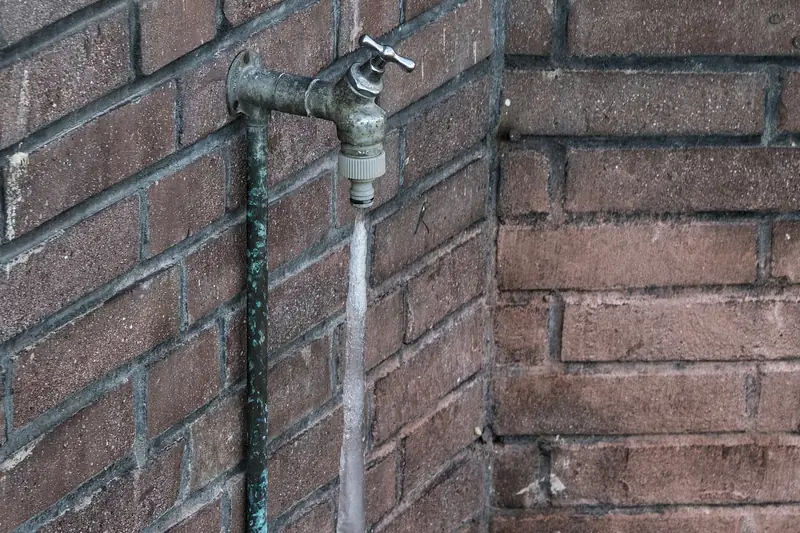
Let faucets drip and let warmer air reach the pipes. The CDC's winter storm page says to leave water taps slightly open so they drip continuously and to open cabinet doors under kitchen and bathroom sinks. The Red Cross gives the same advice and says to let the cold water drip from faucets served by exposed pipes.
If you're leaving a heated house for a trip in cold weather, the Red Cross says to keep the heat on and set no lower than 55°F. That's advice for when the power is on; in a full outage there's no heat to set, which is why dripping faucets and a generator or other heat source matter.
If pipes do freeze, keep flames away from them. The CDC says not to thaw pipes with a torch, and the Red Cross rules out a blowtorch, kerosene or propane heater, charcoal stove or any open flame device. A plumber is the right call for a frozen or burst line.
What should you never use for heat indoors?
Never heat the house with a gas oven or range, a grill, a camp stove or an outdoor heater. Ready.gov says not to use a gas stove or oven to heat your home because it raises the risk of carbon monoxide poisoning, and the CDC says never to use a charcoal grill, hibachi, lantern or portable camping stove inside a home. The CDC's winter storm page adds, simply, that "turning on the stove for heat is not safe."
Propane's own safety council agrees. PERC's booklet for propane users says never to use a barbecue grill indoors for heating or cooking, and that using a space heater designed for outdoor use indoors "can be deadly." CPSC warns against running unvented fuel-burning heaters in any room where people sleep, and New Hampshire's fire code bars an unvented space heater as a home's primary heat. Fill Pipe doesn't recommend unvented propane or kerosene heaters.
What happens when power comes back?
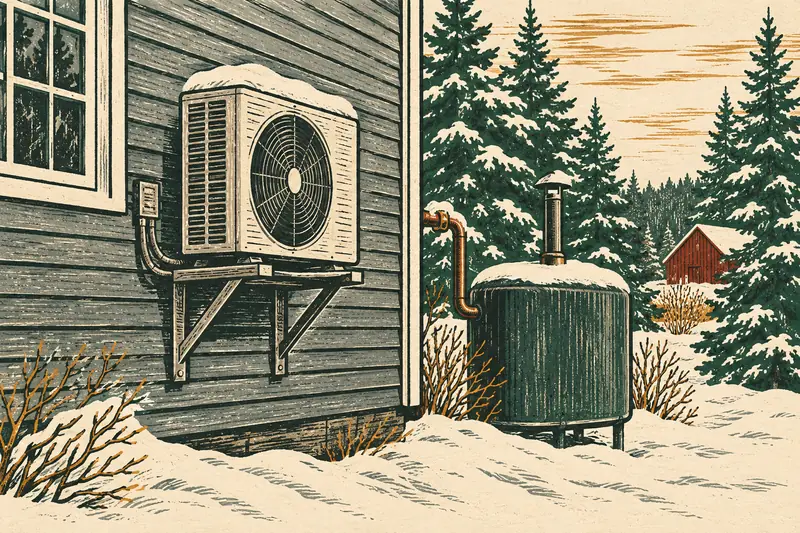
Check the outside vents first. Before the heat runs, make sure exhaust and intake vents aren't buried in snow; PERC says snow and ice can block ventilation and cause high carbon monoxide levels. Shut the generator down where it sits, outdoors.
If an oil burner doesn't start, check the simple things the makers list: thermostat set above room temperature, the boiler or furnace switch on, no tripped breaker, oil in the tank. Riello's owner instructions then allow one press of the reset; if the burner doesn't start, or stops again, call your service technician. The oil burner reset button page has the details, and ran out of heating oil covers an empty tank.
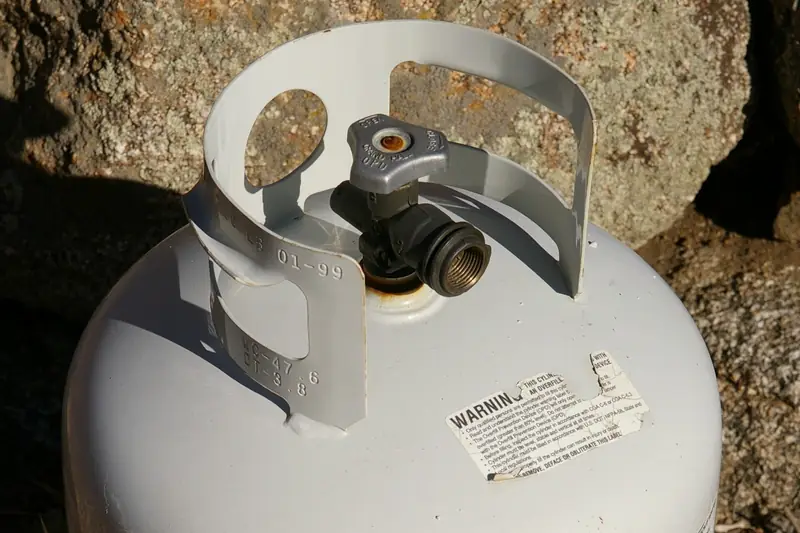
Propane has one extra rule. If the propane ran out during the outage or the gas was shut off, the propane safety council (PERC) wants a leak check by a qualified professional before gas flows again, and lighting pilots is their job too. The ran out of propane page explains the leak check.
Some homeowners ask an electrician or heating technician about surge protection for the boiler or furnace controls. That's their call to make and their part to fit; the card below shows the kind of device a technician might specify.
Who helps with fuel and warming?
Each state runs fuel help through its own agency, and Maine's energy office points people to warming centers. Maine DOER says the Maine Emergency Management Agency keeps a list of warming centers, and that if you're very low on fuel and can't afford a fill, you may qualify for an emergency delivery through 2-1-1 or your Community Action Agency. In New Hampshire, Vermont and New York, check your state's 2-1-1 or emergency management agency for warming centers.
| State | Agency that runs it | Program name | Detail from the agency page |
|---|---|---|---|
| Maine | MaineHousing, paid out by 9 Community Action Agencies | HEAP | Income guidelines for the 2026-2027 season are posted |
| New Hampshire | State Department of Energy and local Community Action agencies | Fuel Assistance Program (FAP) | Funded federally through LIHEAP |
| Vermont | Department for Children and Families | Seasonal Fuel Assistance | Household income at or under 185% of the poverty level |
| New York | OTDA (Temporary and Disability Assistance) | HEAP | 2026-2027 regular benefit scheduled to open Nov. 2, 2026 |
For oil, kerosene or propane households in New York that pay the vendor directly, OTDA lists a regular HEAP benefit of $990 plus applicable add-ons, and emergency HEAP if you're in danger of running out of fuel. Vermont's DCF fuel page says active Seasonal Fuel Assistance households are also eligible for free weatherization.
Board feet: the numbers
- 20 ftminimum generator distance from windows, doors and ventsReady.gov
- 92CO deaths tied to generators in 2020CPSC
- $990New York regular HEAP benefit for oil, kerosene or propane, plus add-onsNY OTDA
- 185%of the federal poverty level, Vermont's Seasonal Fuel Assistance income lineVermont DCF
Scaler's notes: how this page was put together
This page is based on NYS Clean Heat's (NYSERDA) outage page, the CDC's power outage and winter storm pages, Ready.gov's power outage page, CPSC's portable generator safety alert and CO overview, Eversource's generator back-feed page, the Red Cross frozen pipes page, PERC's booklet for propane users (2025), Riello's 40 Series owner instructions, Maine DOER's winter heating resources and the state fuel assistance pages for Maine, New Hampshire, Vermont and New York, all read in October 2026. Left out: generator sizing, propane standby generator run times and fuel use, and phone numbers for assistance programs.
Questions from the woodshed
How long will a house stay warm without heat in a power outage?
No source Fill Pipe read gives a figure; it depends on the house, the insulation and the weather. Watch the indoor temperature, protect the pipes early, and move to a warm place before the house gets dangerously cold.
Can I run my oil boiler on a portable generator?
Only through a transfer switch installed by a licensed electrician, Eversource says, and never by backfeeding through an outlet. Ask the electrician and your heating technician whether your generator can carry the boiler's load.
Is it safe to run a generator in an open garage?
No. The CDC, CPSC and NFPA all say never in a garage, even with the doors open. Keep it outdoors at least 20 feet from windows, doors and vents.
Will a propane fireplace work without power?
Some can and some can't, depending on the model and its ignition. Check the appliance's manual or ask your propane supplier, and only use one that's installed and vented for indoor use.
Does heating fuel assistance cover emergency deliveries?
Some programs do. New York's OTDA says emergency HEAP may help if you're in danger of running out of fuel, and Maine DOER points very low-fuel households to 2-1-1 or their Community Action Agency.
Should I leave the thermostat set while the power is out?
It does no harm, since nothing runs until power returns. When the lights come back, the boiler or furnace should restart on its own; if it doesn't, press an oil burner's reset once at most and then call for service, and leave any propane appliance that won't relight to your supplier or a technician.
More on outages and safety
Back to the tank-gauge front page