Oil Tank Leak: Signs and First Steps
An oil tank leak shows as weeps, wet spots, drips at the filter or a strong oil smell; look without touching, call your oil dealer, and report the spill where your state requires it.
Written by the Fill Pipe desk from state, federal and maker documents · how the pages are made · Updated
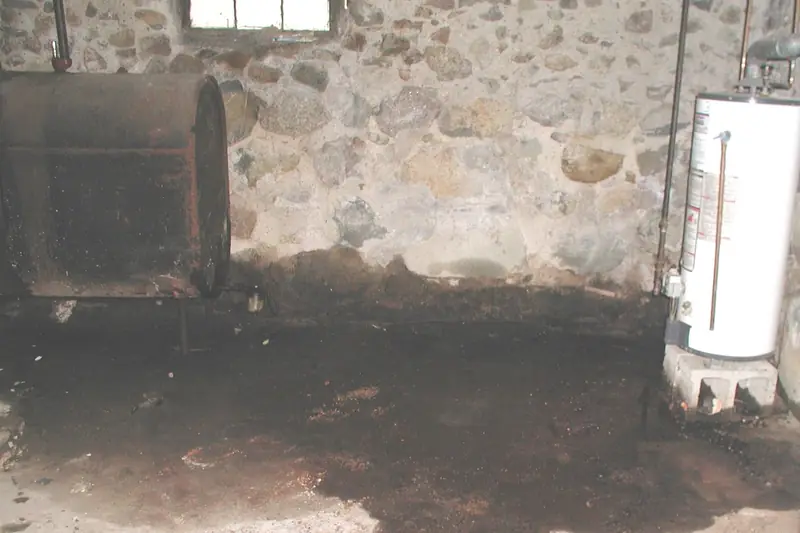
If you find oil or smell it strongly
- Strong oil smell, smoke or soot from the burner: turn nothing on. Leave if smoke fills the space and call 911; otherwise call your oil company's service line.
- Fire or explosion: get everyone out and call 911.
- Oil on the floor or a wet, weeping tank: look, don't touch. Keep people and pets away from it and call your oil dealer.
- Don't try to patch, tighten, drain, move or empty the tank yourself.
- If you're unsure, stop and call your supplier or a licensed technician.
First tap of the season
- Home heating oil tanks spill more than once a day in Maine, by Maine DEP's count, and rust working outward from inside the tank is the top reason.
- Maine DEP's tank checklist lists rust, weeps, wet spots, patches, excessive dents and drips around the filter, valves or fittings as warning signs, and says "Please look - don't touch."
- In Vermont, the AST Rules require an immediate report for a release topping 2 gallons, and for a suspected one such as heavy fuel vapor around the tank.
- New York's Department of Health says to report any fuel oil spill, no matter how small, to the DEC Spill Hotline, and to tell your oil company and your insurer.
- Vermont's Petroleum Cleanup Fund pays, subject to available funding, for certain uninsured cleanup costs from leaking tanks.
- In Maine, 38 M.R.S. § 568-A sets a $500 standard deductible for cleanup-fund coverage when the owner's aboveground storage totals less than 1,320 gallons.
What are the signs of an oil tank leak?
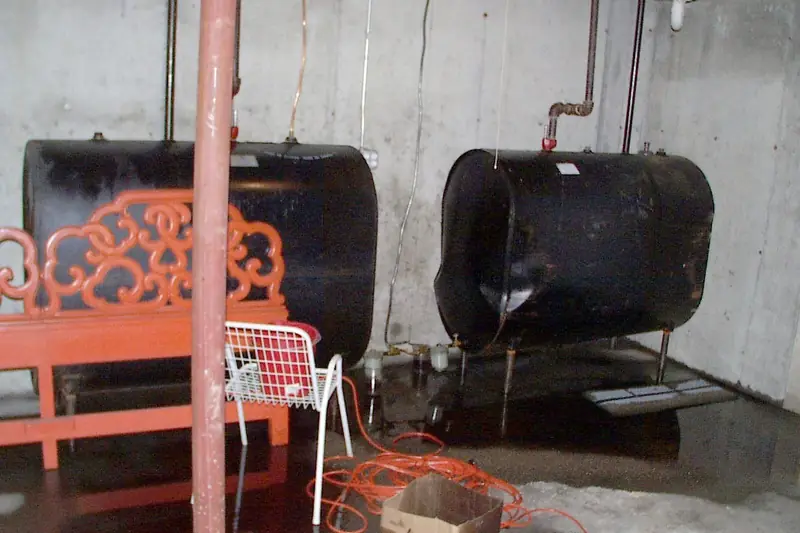
The signs are a wet or weeping tank, rust and pitting, drips at the filter or fittings, a stained floor, a stronger oil smell than usual and oil disappearing faster than you burn it. Maine DEP's check-your-tank questions ask: "Do you see rust, weeps, wet spots, or excessive dents on the tank surface?" and whether you can see drips or leakage where the filter, valves and other fittings join the tank and line. They also ask whether the gauge is cracked or stuck, or stained with oil.
Vermont's rules add two signs you can't see. The AST Rules count "An unusual loss of product" and "Strong petroleum vapors present in the vicinity of the aboveground storage tank" as a suspected release. If your deliveries come closer together with no change in weather or use, and you can't explain it, tell your oil dealer.
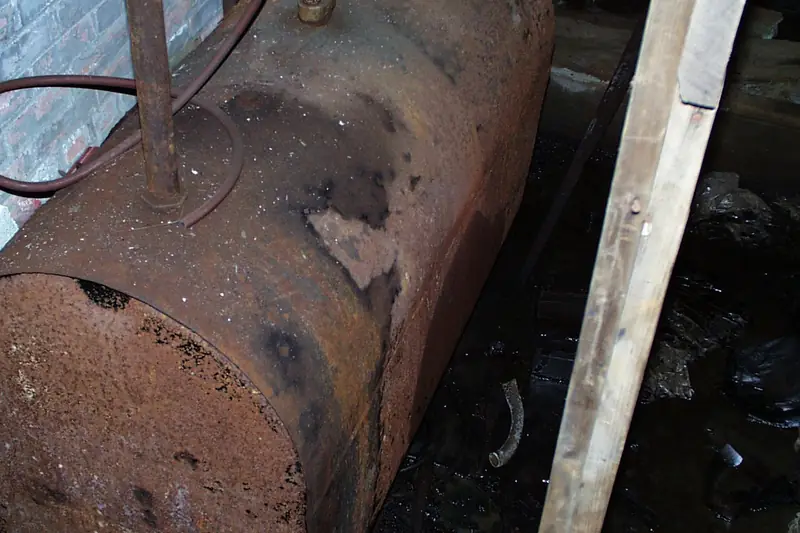
Most leaks start where you can't see them. Maine DEP says water, sludge and sediment build up inside the tank and slowly eat the steel at the bottom, so a tank can fail with a clean-looking top. That is why age matters as much as appearance, as the oil tank replacement page explains.
What should you do first?
First, keep everyone safe and leave the tank alone: a strong smell or smoke means switch nothing on, get out if the cellar is filling with smoke and dial 911, and a small weep or stain means call your oil dealer. Don't touch, tighten or patch anything, and don't start running fans, heaters or tools beside the tank. Maine DEP's checklist puts the rule in four words: "Please look - don't touch."
Then make the calls. Your oil dealer or service company can stop the source, and in Vermont and New York you will also need to report the spill (next section). New York's Department of Health, in its home heating oil spill page, says to always notify your oil delivery company and your insurance company. The same page warns that oil odors can bring on headaches, nausea and dizziness; if anyone feels ill, get them to fresh air and call for help. For a smell with no visible leak, the oil smell page covers the other causes, and the carbon monoxide page covers alarms and symptoms.
Who do you report an oil spill to?
Who you report to depends on the state, and in Vermont and New York the rule is to report right away.
- Vermont: under the AST Rules, report "immediately" any release over 2 gallons or any suspected release, to the DEC Waste Management and Prevention Division during office hours or the Vermont Division of Emergency Management at any time. Vermont DEC's spill management page says to talk directly with someone: not email, text or a voicemail alone.
- New York: report any fuel oil spill, "no matter how small," to the NYS Department of Environmental Conservation Spill Hotline, call 911 for fire or explosion, and notify your oil company and insurer.
- Maine and New Hampshire: tell your oil dealer and your state's environmental agency, Maine DEP or the New Hampshire Department of Environmental Services. We couldn't read either agency's reporting page, so we give no deadline or number; ask the agency what it needs.
| State | Report to | What the source says |
|---|---|---|
| Vermont | DEC Waste Management and Prevention Division; Division of Emergency Management after hours | Over 2 gallons or a suspected release, immediately; speak to a person |
| New York | NYS DEC Spill Hotline; 911 for fire or explosion | Any spill, no matter how small; also tell oil company and insurer |
| Maine | Your oil dealer and Maine DEP | Reporting page not readable to us; ask DEP |
| New Hampshire | Your oil dealer and NHDES | Reporting page not readable to us; ask NHDES |
What about old underground tanks?
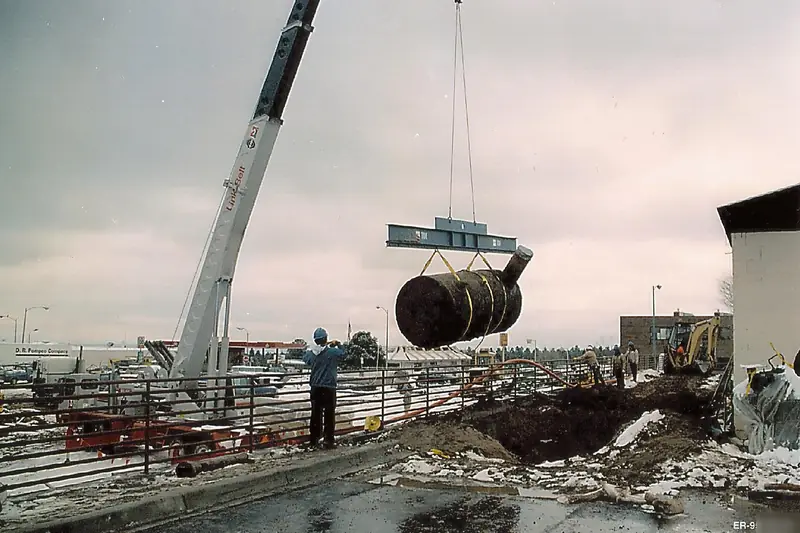
Old buried home tanks are harder to check, and the rules for them differ by state. In New York, 6 NYCRR Part 613 treats an underground system over 110 gallons as a "facility" in general, but leaves out on-premises heating oil systems under 1,100 gallons. We couldn't read DEC's homeowner page on underground tanks or any county rules, so ask your county and town before buying or digging.
New Hampshire's Safetank program can reimburse up to $4,500 to remove an underground home heating oil tank. In Maine, 38 M.R.S. § 568-A bars cleanup-fund coverage for discharges found after October 1, 1998 from underground tanks not made of fiberglass, cathodically protected steel or another approved noncorrosive material. Buried oil lines are a risk even with the tank indoors: Maine DEP says an unsleeved line under the basement floor can corrode and must be replaced, and Vermont requires buried lines to be coated or sleeved.
How do you prevent a leak?
Prevent a leak by having the tank checked regularly, keeping it protected and replacing it on time. New York's Department of Health says to inspect your fuel oil tank every year for signs of deterioration or damage. Vermont makes the check a rule: a credentialed inspector looks at the tank at least every four years, and a red-tagged tank gets no deliveries until it is fixed. A yearly service visit is also the moment to ask the technician to look over the tank and lines.
Protect what the tank is exposed to. Maine DEP's checklist asks whether snow or ice can fall on the tank, filter or piping and notes that a filter protector can help; Vermont requires new outdoor tanks to be protected from snow and ice. Keep the fill whistle working, because Maine DEP says broken whistles lead to overfills, and plan replacement on Maine DEP's timeline of 20 years to start planning and about 25 for a steel tank. The 275-gallon tank page covers the whistle and gauge.
Who pays for cleanup?
The tank owner is usually responsible, though state funds can cover part of eligible costs in some states. Vermont DEC says its Spill Program can hire cleanup contractors when the responsible party is unknown, unwilling or unable, and must then pursue cost recovery from potentially responsible parties.
Vermont's Petroleum Cleanup Fund was created to pay, "subject to available funding, for certain uninsured costs" of cleaning up soil and groundwater contaminated by releases from aboveground and underground tanks, with a deductible chart. In Maine, § 568-A requires a written request for fund coverage within 180 days of reporting the discharge; for owners whose aboveground storage totals less than 1,320 gallons, the standard deductible is $500, and DEP may waive it for a Fuel Board-regulated tank under 300 gallons that passed an ultrasonic thickness test within 12 months before the discharge. We found no readable New Hampshire or New York cleanup-fund page for homeowners, and no primary source on what homeowner insurance covers, so ask your insurer in writing.
Leak and spill numbers
- 1+home heating oil spills a day in MaineMaine DEP
- 2 gallonsrelease size that must be reported in VermontVermont AST Rules
- $500Maine cleanup-fund standard deductible for owners with under 1,320 gallons aboveground38 M.R.S. § 568-A
- 180 daysto request Maine fund coverage after reporting a discharge38 M.R.S. § 568-A
What to tell the oil dealer or agency
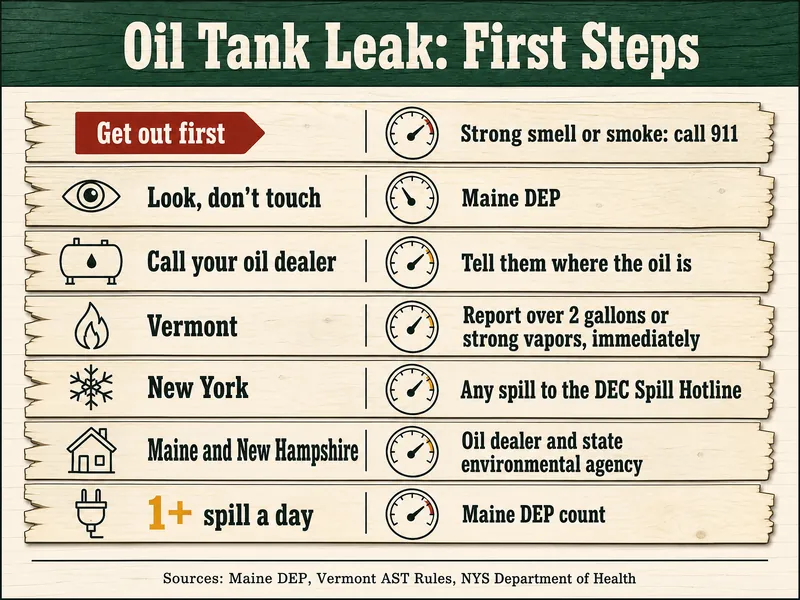
Where the oil is
Under the tank, at the filter, along the line or at the fill pipe outside.
Roughly how much
A stain, a puddle, or more than a couple of gallons; Vermont's reporting line is 2 gallons.
When you noticed it
And whether deliveries have come closer together lately.
Who is affected
Anyone with headaches or nausea, a nearby well, a sump or a floor drain.
Scaler's notes: how this page was put together
This page draws on Maine DEP's check-your-tank and buried-line pages, Vermont's AST Rules (effective August 1, 2024) and DEC's spill management and Petroleum Cleanup Fund pages, the New York State Department of Health's home heating oil spill page, 6 NYCRR Part 613, New Hampshire's Safetank page and 38 M.R.S. § 568-A, read in October 2026. We left out cleanup steps, phone numbers, Maine and New Hampshire reporting deadlines (their pages were not readable to us) and any claim about insurance coverage.
Questions from the woodshed
Is a little oil under the filter a leak?
Treat it as one. Oil showing at the filter or its fittings is on Maine DEP's list of tank warning signs. Call your oil dealer or service company, and don't tighten anything yourself.
Should I put kitty litter or rags on spilled oil?
We found no state source giving homeowners cleanup steps, so we don't give any. Keep people and pets away, call your oil dealer, and report the spill where your state requires it; the agency or the cleanup contractor will say what to do.
Does a small spill in New York need reporting?
Yes. The New York State Department of Health says to report any fuel oil spill, no matter how small, to the DEC Spill Hotline.
Can I report a Vermont spill by email?
No. Vermont DEC's spill page says not to report by email, text or any written message, and that a voicemail alone won't do; you must talk with someone from Emergency Management or the Spill Program.
Does the cleanup fund pay for a new tank?
Vermont's Petroleum Cleanup Fund is for contaminated soil and groundwater and third-party damage, not tank replacement. For tank costs, see the help listed on the replacement page, such as New Hampshire's Safetank.
Can oil fumes make you sick?
They can for a while: New York's health department links heating oil odors with brief bouts of headache, nausea, dizziness and short breath. Get anyone who feels ill into fresh air, and if a CO alarm sounds, everyone goes outside and calls 911.
Keep reading
Back to the tank-gauge front page