Folder · 4 pages
Switching From Oil or Propane
Switching from oil or propane usually means adding a cold-climate heat pump, and up here the rules on keeping the old boiler, and the rebates that pay for it, change at every state line.
Written by the Fill Pipe desk from state, federal and maker documents · how the pages are made · Updated
First tap of the season
- In 2024 data from EIA, 50.3% of Maine households heated mainly with fuel oil and 16.0% with propane; New Hampshire stood at 37.0% and 20.4%, Vermont at 35.5% and 19.8%.
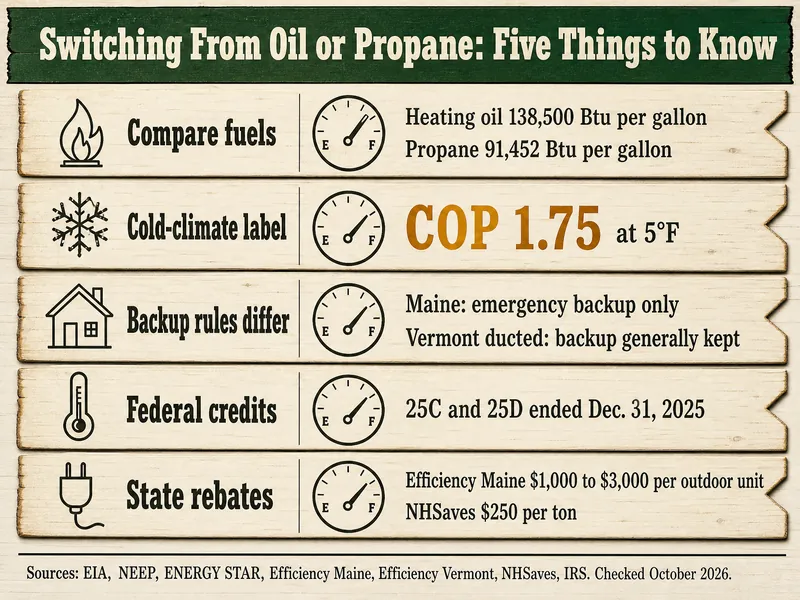
- EIA rates a gallon of heating oil at 138,500 Btu and a gallon of propane at 91,452 Btu, so fuels are compared per million Btu, not per gallon.
- NEEP's cold-climate specification asks for a COP of at least 1.75 at 5°F; ENERGY STAR's Cold Climate label adds a 70% capacity test at 5°F.
- Efficiency Maine's whole-home rebates allow the old furnace or boiler only as emergency backup, while Efficiency Vermont says ducted heat pump jobs generally keep the fossil system.
- The federal 25C and 25D home energy credits do not cover work finished after Dec. 31, 2025, per IRS FS-2025-05.
- State and utility rebates still running in October 2026 include Efficiency Maine ($1,000 to $3,000 per outdoor unit), NHSaves ($250 per ton) and NYSEG/RG&E (up to $10,000 for air-source).
When to stop and call
- You smell propane or gas: get everyone out, touch no switches, phones or flames inside, and from well away call 911, then your propane supplier.
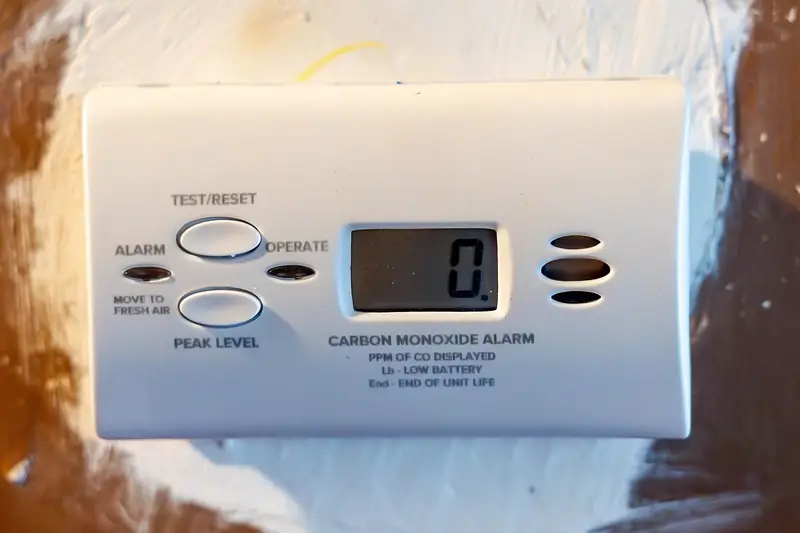
- A CO alarm sounds, or people in the house have a headache, dizziness, nausea or confusion: everyone outside, call 911, and stay out until responders say it's safe.
- The oil burner puffs smoke or soot: turn nothing on, leave if smoke fills the space and call 911; otherwise call your oil company's service line.
- If you're unsure, stop and call your supplier or a licensed technician.
Should you switch from oil or propane?
Many households in Maine, New Hampshire, Vermont and upstate New York don't switch all at once: they add a heat pump and keep oil or propane for the coldest stretch. The U.S. Department of Energy says cold-climate air-source heat pumps can cut household energy use by up to 40%, with homes now on fuel oil or electric baseboard likely to save the most. That is DOE's figure, not a promise for your house.
Whether keeping the old system is allowed depends on the program paying the rebate, so read the program page before the installer writes the quote. Fill Pipe sells no fuel or equipment; these pages explain the choices and link the agencies that set the rules.
Start with the fuel and the climate
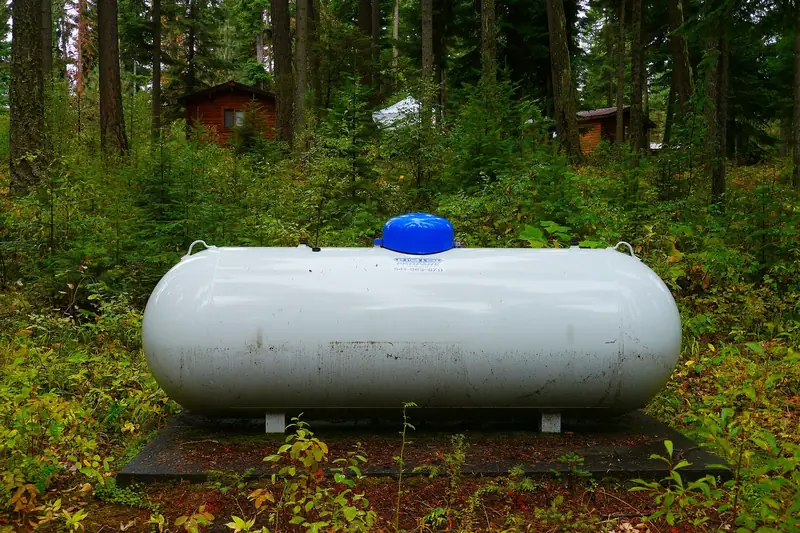
How do oil and propane compare?
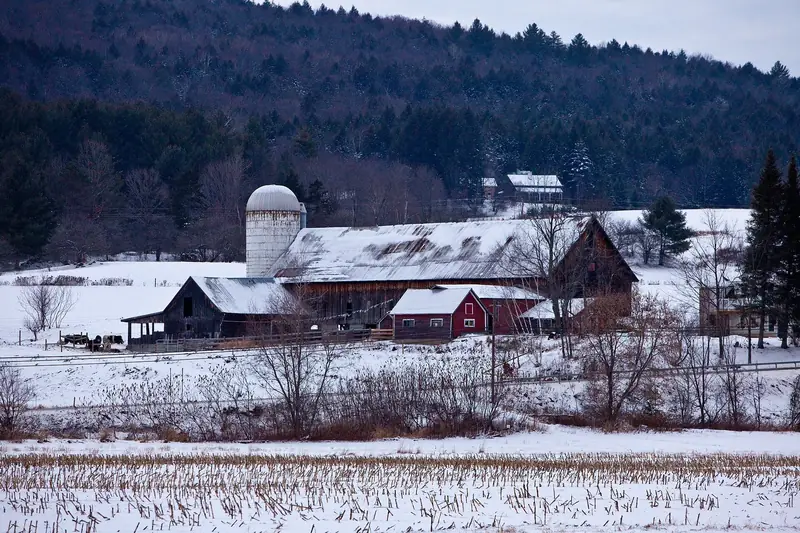
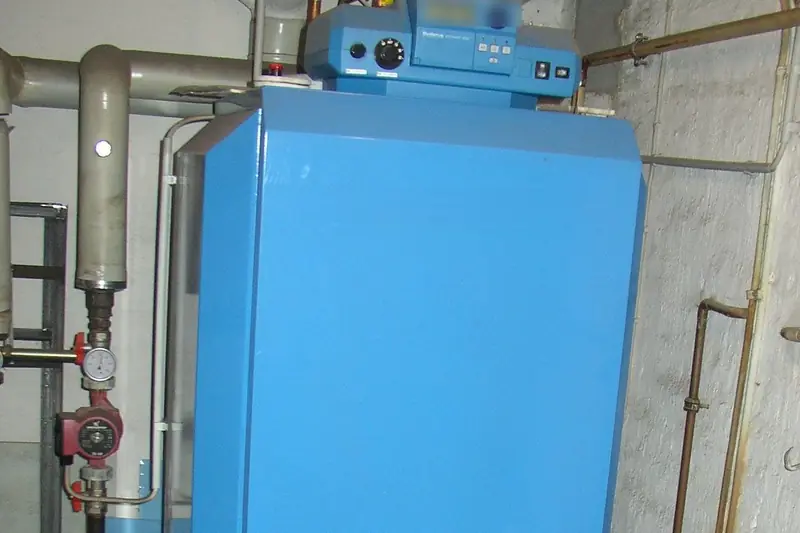
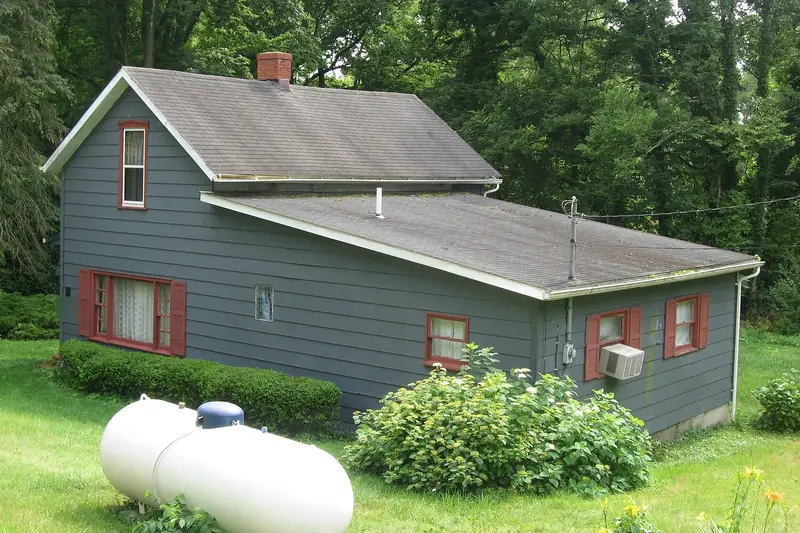
Gallon for gallon, heating oil holds about half again as much heat as propane: EIA lists 138,500 Btu for oil and 91,452 Btu for propane. That is why a lower propane price per gallon doesn't settle the question by itself.
New Hampshire's Department of Energy does the arithmetic each week. On its October 26, 2026 table, at an assumed 80% efficiency for both, oil came to $54.47 and propane to $57.07 per million Btu. Prices differ by state and by survey, so the table below uses one survey, EIA's, for all four states.
| State | Heating oil | Propane |
|---|---|---|
| Maine | $6.040 | $3.679 |
| New Hampshire | $6.068 | $3.904 |
| Vermont | $6.095 | $3.930 |
| New York | $6.441 | $3.794 |
Fuel by fuel
Do heat pumps work in a northern winter?
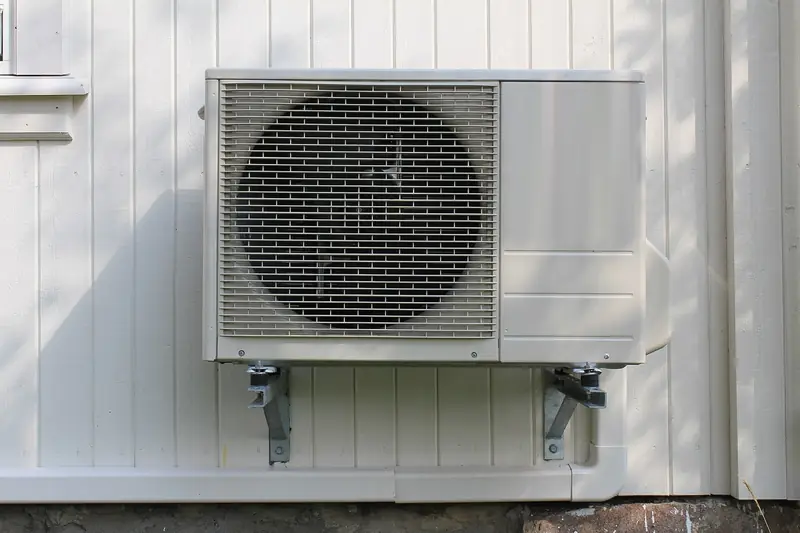
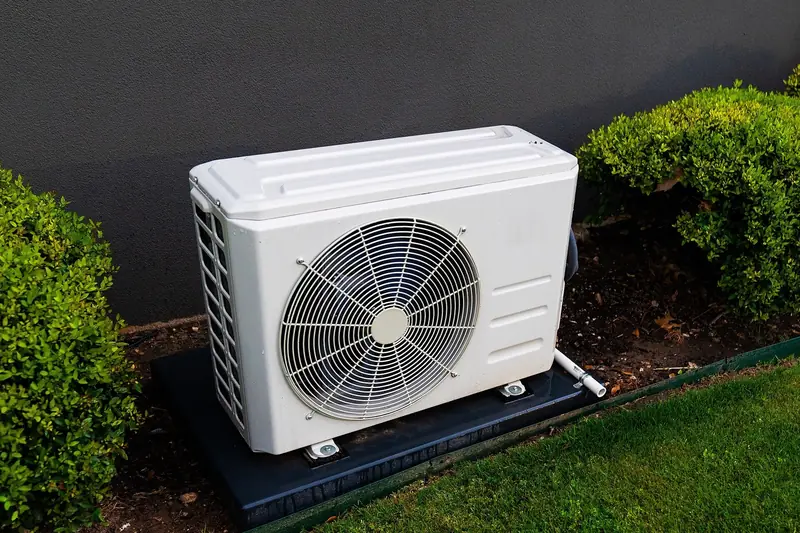
Cold-climate models do: Efficiency Maine says on its heat pump page that many provide efficient heating down to -22°F or lower. The label to look for comes from NEEP, whose cold-climate specification requires a coefficient of performance of at least 1.75 at 5°F.
ENERGY STAR's Cold Climate criteria go a step further: capacity at 5°F must be at least 70% of capacity at 47°F. Sizing still matters more than the sticker, and a load calculation is the installer's job.
Heat pumps in the cold
Should you keep the old system as backup?
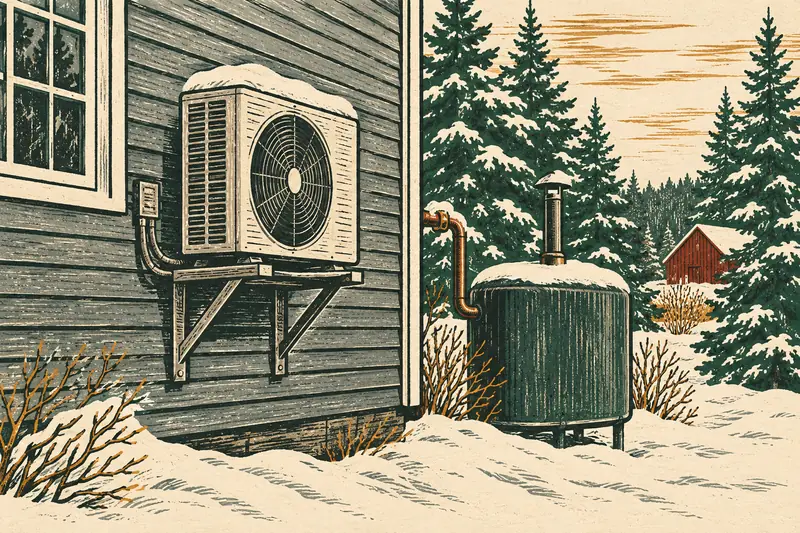
It depends on the program: Efficiency Maine's whole-home rebates let a furnace or boiler stay only for emergency backup, and its ducted rebates require removing forced-air furnaces. Efficiency Vermont's ducted heat pump page says the fossil system generally must stay as backup, and it pays up to $600 toward integrated controls that run a ductless heat pump with an oil or propane boiler.
Backup doesn't cover a power outage. NYS Clean Heat points out that furnaces, boilers and heat pumps all need electricity to start and to move heat, so none of them run when the lines are down.
Backup and outages

Which rebates are left in 2026?
State and utility programs remain; the federal credits don't. The IRS says 25C is not allowed for property placed in service after Dec. 31, 2025, and 25D is not allowed for expenditures made after that date.
The federally funded HEAR rebates are uneven. New Hampshire's Department of Energy says its program is expected to launch in fall 2026 and won't pay for projects started earlier; Vermont's has been on hold since May 2025. In Maine, HEAR covers only new affordable multifamily buildings and mobile homes, and in New York it runs through NYSERDA's EmPower+ for income-eligible households.
Money for the switch
 Switching and backup: Heat pump rebates, state by state
 Switching and backup: What a cold-climate label means before you buy
 Back to Fill Pipe's front page
The switch in numbers
- 50.3%Maine households heating mainly with fuel oil, 2024 dataEIA
- 138,500Btu in one gallon of heating oilEIA
- 91,452Btu in one gallon of propaneEIA
- 1.75Minimum COP at 5°F for a NEEP cold-climate listingNEEP
- $250NHSaves rebate per ton for homes switching from oil or propane, 2026NHSaves
Scaler's notes: how this page was put together
This hub draws on EIA's 2024 state energy profiles and its Heating Oil and Propane Update for the week of October 26, 2026; the New Hampshire Department of Energy fuel price table of the same date; NEEP's cold-climate specification version 4.0; ENERGY STAR's air-source heat pump criteria; the IRS FAQ on the 25C and 25D credits; and the rebate pages of Efficiency Maine, NHSaves, Efficiency Vermont and NYSEG, all read in October 2026. It leaves out payback promises, a single switchover temperature and any federal credit for 2026 work, because no primary source supports them.
Questions from the woodshed
Is it cheaper to heat with a heat pump than with oil in Maine?
Often, but it depends on your prices and equipment. Efficiency Maine's own worked example, using its calculator defaults from September 2026, shows a two-unit heat pump system saving $1,319 a year against propane. Run its calculator with your own oil, propane and electric rates rather than trusting a general figure.
Can I keep my oil tank after adding a heat pump?
Usually yes, if you keep the oil boiler as backup, though Efficiency Maine's whole-home rebate limits that boiler to emergency use. If you later remove the boiler, the tank goes too; the 275-gallon oil tank page covers what Maine DEP says about tank age.
Does propane or oil heat work during a power outage?
No. Oil and propane boilers and furnaces need electricity for their burners, pumps and blowers, and heat pumps do too. Plan for outages separately, and run any generator outdoors at least 20 feet from the house.
Are there still federal tax credits for heat pumps?
Not for 2026 work. The IRS says 25C does not apply to property placed in service after Dec. 31, 2025, and paying a deposit in 2025 does not save a 25D claim if installation was completed in 2026.
Which states pay to keep oil or propane as backup?
Efficiency Vermont offers up to $600 toward integrated controls when a new ductless heat pump runs with an oil, propane or natural gas central system, with a $150 customer share. Efficiency Maine's whole-home rebates take the opposite approach and do not rebate dual-fuel systems.
Should I convert from oil to propane instead of a heat pump?
Compare the cost per million Btu with your own prices and count the tank: Maine's Attorney General says most residential propane customers don't own their tanks, and Maine law lets only the owner fill one. The heating oil vs propane page works through both fuels using dated state surveys.