Ran Out of Heating Oil
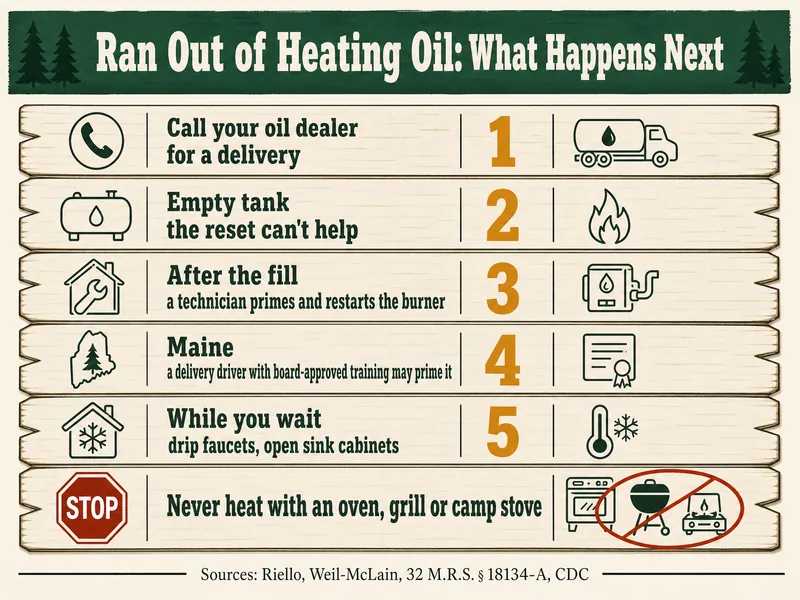
Ran out of heating oil? Call your oil dealer for a delivery, don't press the reset on an empty tank, and expect a technician to prime and restart the burner after the fill.
Written by the Fill Pipe desk from state, federal and maker documents · how the pages are made · Updated
Who’s behind the links: Fill Pipe is run by the people who own Plumbing Supply and More, SoftPro Water Systems and Quality Water Treatment, and it has a working tie to Central Plumbing & HVAC. No business pays to appear here. Figures and safety steps on this page come from state energy offices and environmental agencies, federal agencies (EIA, IRS, CPSC, CDC), the propane and heating-oil industries' own safety programs, and equipment makers' manuals, read in October 2026. Fill Pipe sells no fuel and services no equipment. Owners and outbound links
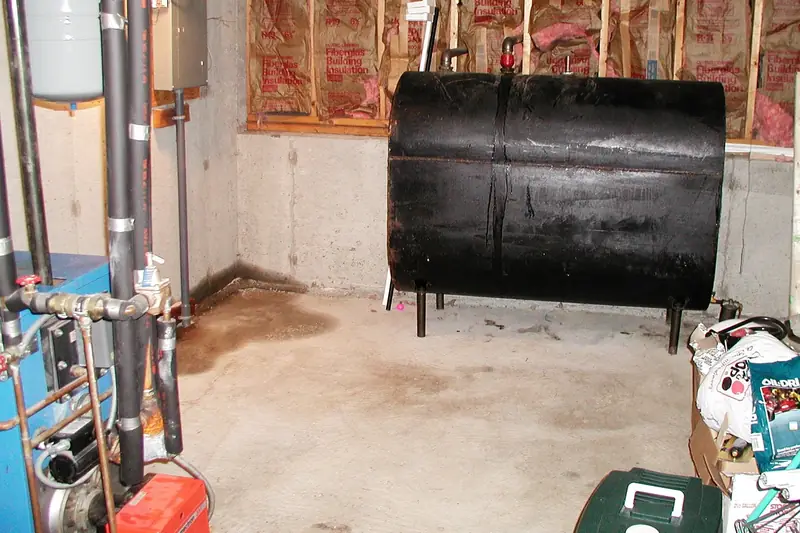
First tap of the season
- Call your oil dealer for a delivery first; in Maine, Chapter 100 rules from October 15 to April 30 say a dealer serving your area must still fill a cash order of 20 gallons or more from a customer who owes it money.
- On an empty tank the reset can't help; after the delivery, leave the restart to the technician (or in Maine a trained driver), and if you press it at all, once at most, since Weil-McLain says repeated presses deposit oil in the combustion chamber.
- After a run-out the burner usually needs a technician to prime it; in Maine a delivery driver with board-approved training may do it under 32 M.R.S. § 18134-A.
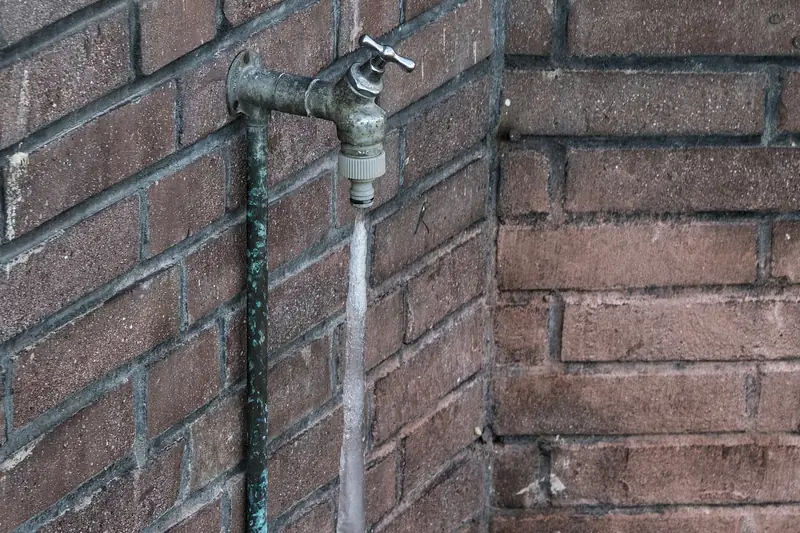
- While you wait, CDC says let taps drip and open the cabinet doors under sinks so heated air can reach the pipes.
- Never heat with an oven, grill or camp stove; CPSC and CDC both warn these cause carbon monoxide poisoning indoors.
- Fuel help runs through Maine HEAP, New Hampshire's Fuel Assistance Program, Vermont Seasonal Fuel Assistance and New York HEAP, whose 2026-27 regular benefit opens November 2, 2026.
Stop and call if
- The burner doesn't start after one press of the reset, or it stops again: don't press it again.
- You smell strong oil or exhaust, or see smoke or soot near the burner.
- The CO alarm sounds or anyone feels sick, dizzy or confused: everyone outside, then call 911 from outside.
- You're tempted to warm the house with an oven, grill, camp stove or a generator inside.
- If you're unsure, stop and call your supplier or a licensed technician.
What should you do if you ran out of heating oil?
If you ran out of heating oil, call your oil dealer for a delivery and ask that a technician, or a trained driver, restart the burner. Before you call, read the tank gauge so you can say it's empty, and check the thermostat and the boiler switch so you aren't chasing a different problem.
Maine has the clearest rules on this. The Maine Attorney General's home heating fuels page explains Chapter 100, in effect from October 15 through April 30: a dealer can't refuse you, even if you owe them money, when you have cash or government-backed payment, the dealer regularly serves your area, and you ask for at least 20 gallons. The oil comes on the dealer's next scheduled trip to your area. A small order can carry a scheduled-delivery surcharge of up to $20 when you buy less than half your tank or 100 gallons, whichever is less.
New Hampshire, Vermont and New York don't have a matching rule on Fill Pipe's list, so ask your dealer what a small or emergency delivery costs before they send the truck.
Why won't the burner restart after a delivery?
The burner usually won't restart after a run-out because it needs priming once the tank has gone dry, and its safety control may also have locked out after failed tries to light. Fresh oil in the tank doesn't undo either one.
Weil-McLain's WGO Series 4 manual allows one press of the reset after the basic checks and says repeated presses "will deposit oil in combustion chamber." If one press doesn't start it, the oil burner reset button page explains what to tell the service tech.
Newer controls count failures and latch into a lockout that, in Beckett's and Carlin's manuals, only a qualified technician should clear.
Who primes the burner?
A service technician primes the burner, and in Maine a delivery driver with board-approved training may also do it. Maine's statute, 32 M.R.S. § 18134-A, says a home heating oil delivery driver "may bleed a residential home heating oil burner" with documentation of a board-approved course, and must refer a burner that still fails to a licensed oil technician.
Fill Pipe found no matching rule for drivers in New Hampshire, Vermont or New York, so ask your dealer whether the driver can restart the burner or whether a service call is needed. Beckett's AF/AFG burner manual describes a pump prime mode that exists for "allowing the technician to prime the pump." It isn't a homeowner job, and Fill Pipe gives no steps for it.
How do you keep the house safe while you wait?
Keep the house safe by protecting the pipes, keeping fuel-burning stopgaps outdoors, and keeping your CO alarms working. A house without heat in a northern January can drop fast, and the frozen-pipe and carbon monoxide risks are both real.
- Pipes. The CDC's winter storm safety page says leave taps slightly open so they drip, open cabinet doors under the kitchen and bathroom sinks, and never thaw a frozen pipe with a torch.
- Never heat with an oven, grill or camp stove. CPSC, CDC and the propane industry's safety council all warn against heating with a gas range or oven, and against using grills, camp stoves or outdoor heaters indoors.
- Generators stay outside. If you run one for lights or a sump pump, it goes at least 20 feet from the house, away from windows, doors and vents, with the exhaust pointing away, per CDC. House wiring only through a transfer switch installed by a licensed electrician.
- CO alarms. One on every level, including the basement, and outside each sleeping area; NFPA also recommends one in each bedroom.
If it gets dangerously cold, Maine's Department of Energy Resources notes that warming centers open in emergencies; other states list them through their emergency management agencies. The power outage heat page covers the same steps for a storm.
Run-out numbers worth knowing
- 20gallons: the smallest cash order a Maine dealer serving your area must deliver, Oct 15 to Apr 30Maine Attorney General
- $20top scheduled-delivery surcharge on a small Maine orderMaine Attorney General
- 1press of the reset, at mostWeil-McLain
- Nov 2, 2026opening of New York's 2026-27 regular HEAP benefitNY OTDA
How do you avoid running out again?
Avoid running out again by reading your tank gauge on a schedule, ordering early, or moving to automatic delivery. The Maine Attorney General's tip is to watch the fuel level and call a reasonable time ahead, because emergency deliveries cost more.
Maine's Department of Energy Resources, in its 2026-2027 winter heating booklet, suggests asking your provider about automatic delivery, where the dealer monitors your fuel use so you don't accidentally run out. Fill Pipe compares automatic, will-call and budget arrangements on the heating oil delivery plans page.
Two tank details matter too. A tank gauge that's cracked, stuck or frozen gives you a false reading; Maine DEP lists that on its check-your-tank list. In Vermont, a tank with a red tag can't receive deliveries until the problem is fixed, so a red tag can leave you dry; see the 275-gallon oil tank for gauge and tank basics.
| State | Program | Run by | What to know |
|---|---|---|---|
| Maine | Home Energy Assistance Program (HEAP) | MaineHousing, through nine Community Action Agencies | Benefits usually go straight to the fuel vendor |
| New Hampshire | Fuel Assistance Program | NH Department of Energy with Community Action Agencies | The 2024 program opened December 1; the 2026-27 date wasn't confirmed |
| Vermont | Seasonal Fuel Assistance and Crisis Fuel Assistance | Department for Children and Families | Income at or below 185% of the federal poverty level |
| New York | Home Energy Assistance Program (HEAP) | Office of Temporary and Disability Assistance | Regular benefit opens Nov 2, 2026; emergency HEAP if you're in danger of running out |
Maine DOER also says a household that is very low on fuel and can't afford to fill the tank may qualify for an emergency delivery through its local Community Action Agency.
Does running low stir up sludge?
The sludge is real, but Fill Pipe found no primary source that measures whether running low pulls more of it into the line. Maine DEP's spill FAQ explains that fine impurities in heating oil let water, sludge and sediments build up at the bottom of a tank, where they eat away at the steel.
The DOE/NREL biodiesel handling report says the same of older steel tanks: after years of service, they typically have a layer of oxidized fuel products and possibly water on the bottom. What protects the burner is the oil-line filter, which Riello says your service technician should replace every year. If the burner quits again soon after a run-out, tell the technician, and ask whether the filter or the tank bottom needs a look.
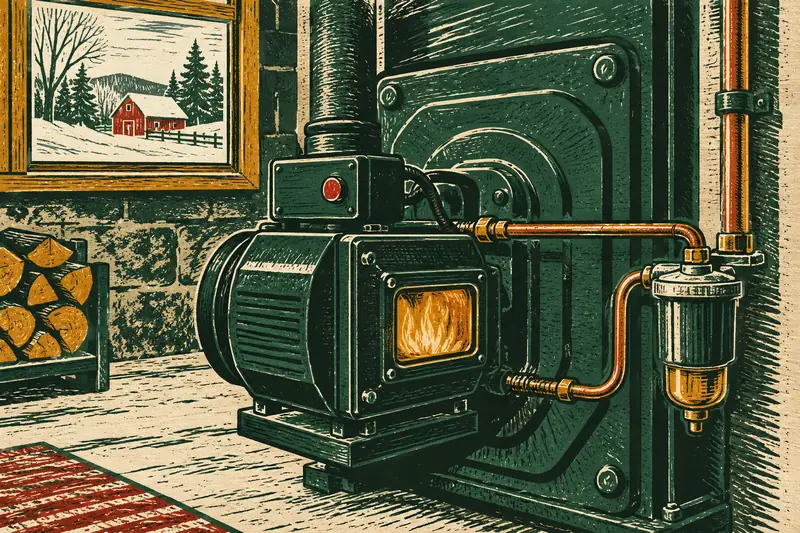
The filter is the technician's part, changed at the annual visit. The listing below shows what a top-mounted fuel filter canister looks like; the technician picks the cartridge that fits your line.
Scaler's notes: how this page was put together
This page is based on the Maine Attorney General's Chapter 100 summary, Maine's Fuel Board statute (32 M.R.S. § 18134-A), Maine DOER's winter heating resources and its 2026-2027 winter heating booklet, Maine DEP's tank checklist, Vermont's AST rules, the DOE/NREL biodiesel handling report, Weil-McLain, Riello, Beckett and Carlin manuals, CDC, CPSC and NFPA safety pages, and the four states' fuel assistance pages, all read October 2026. Left out: priming and bleeding steps, how many gallons a gauge mark means, and any claim about how fast a house cools, since none of the sources we read gives one.
Questions from the woodshed
How much oil should you order after running out?
Enough to get the burner running and carry you to a planned delivery. In Maine, ordering less than half your tank or 100 gallons, whichever is less, can bring a scheduled-delivery surcharge of up to $20 under Chapter 100.
Can you pour diesel or kerosene in the tank to get by?
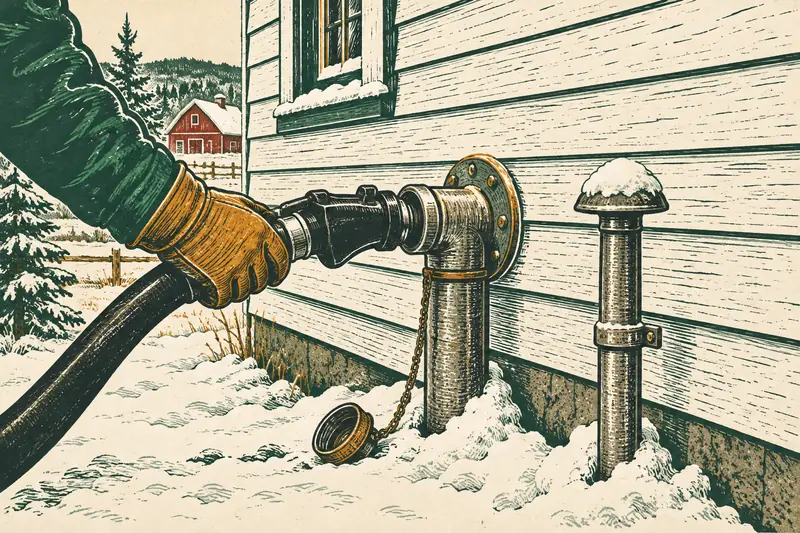
No. Don't pour fuel in yourself; call your dealer for an emergency delivery. Burner makers such as Riello warn never to use gasoline, crankcase oil or any oil containing gasoline, and the fill pipe is the dealer's to use.
Does it cost extra to have the burner primed?
Ask when you order. It's usually a technician's service call; in Maine a driver with board-approved training may do it at delivery, so ask whether your dealer sends one.
Will the hot water come back when the oil does?
If your hot water comes from a coil in the boiler, it returns once the burner is running again. Until then there's no hot water from that boiler.
What if the dealer can't come until tomorrow?
Protect the pipes and use no indoor fuel-burning stopgaps. If anyone is at risk from the cold, ask your town or state emergency management office where warming centers are open.
Is running out bad for the tank?
Fill Pipe found no primary source that says one run-out harms a tank. Maine DEP's concern is the sludge and water that collect at the bottom over the years, which is why tank age and condition matter.
Related pages
Back to the tank-gauge front page