Cold-Climate Heat Pumps Up North
A cold climate heat pump is one rated to keep heating efficiently at 5°F, with a COP of at least 1.75 under NEEP's specification, and the right size matters more than the label.
Written by the Fill Pipe desk from state, federal and maker documents · how the pages are made · Updated
Who’s behind the links: Fill Pipe is run by the people who own Plumbing Supply and More, SoftPro Water Systems and Quality Water Treatment, and it has a working tie to Central Plumbing & HVAC. No business pays to appear here. Figures and safety steps on this page come from state energy offices and environmental agencies, federal agencies (EIA, IRS, CPSC, CDC), the propane and heating-oil industries' own safety programs, and equipment makers' manuals, read in October 2026. Fill Pipe sells no fuel and services no equipment. Owners and outbound links
First tap of the season
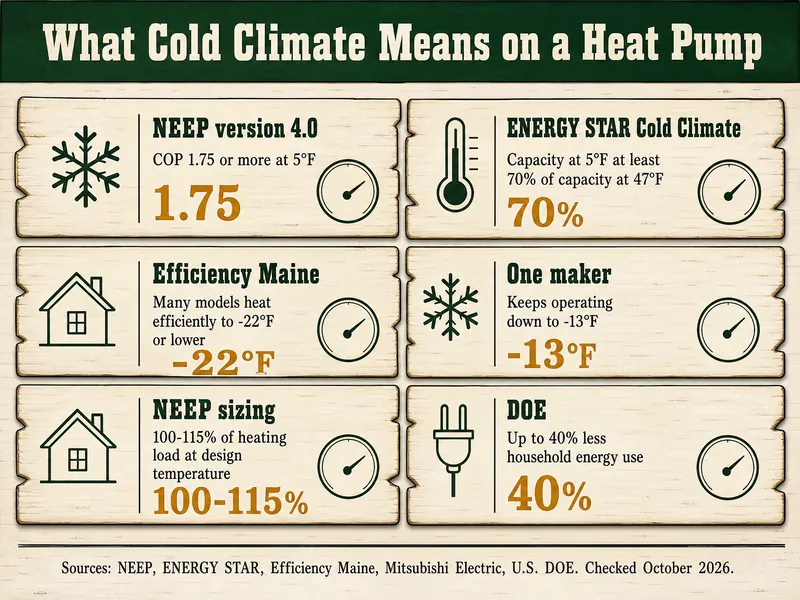
- NEEP's cold-climate specification, version 4.0, effective Jan. 1, 2023, requires a COP of at least 1.75 at 5°F at maximum capacity.
- ENERGY STAR's Cold Climate designation adds that heating capacity at 5°F must be at least 70% of capacity at 47°F, plus a controls check.
- Efficiency Maine says many heat pumps deliver efficient heat to -22°F or colder, regardless of windchill, and rebates only units meeting a design temperature for the project's location.
- DOE says cold-climate air-source heat pumps can reduce household energy use by up to 40%, with oil-heated homes among those likely to save most.
- NEEP's sizing sheet says a full-replacement system should cover 100-115% of the heating load at the design temperature without auxiliary heat.
- On Efficiency Maine's calculator defaults of October 23, 2026, a ductless heat pump works out to about $24.19 per million Btu, against $48.42 for an oil boiler.
Stop and call if
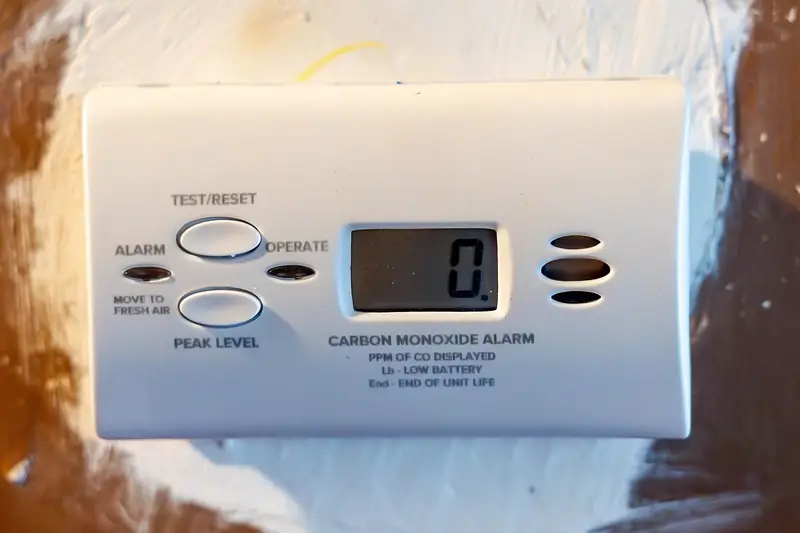
- A CO alarm sounds, or someone feels headachy, dizzy, sick to the stomach or confused, in a house that still has an oil or propane burner: get everyone outdoors, call 911, and wait for responders before going back in.
- You smell propane or gas: leave at once without touching switches, phones or flames, then call 911 and your propane supplier from well away.
- The power is out and you run a generator: outdoors only, at least 20 feet from the house and away from windows, doors and vents, with house wiring connected only through a transfer switch installed by a licensed electrician.
- If you're unsure, stop and call your supplier or a licensed technician.
What is a cold climate heat pump?
It is an air-source heat pump tested to heat well at 5°F, not just at the milder 47°F point most ratings use. NEEP, the Northeast efficiency group, built its specification for climate zone 4 and colder, and it sets a coefficient of performance of at least 1.75 at 5°F. A COP of 1.75 means the unit delivers 1.75 units of heat for each unit of electricity it uses.
ENERGY STAR's Cold Climate criteria use the same 1.75 floor and add a capacity test: at 5°F, the unit must still put out at least 70% of its 47°F heating capacity. It also requires a controls verification, so the 5°F numbers hold with the unit's own controls running as they would in a home. NEEP's own caution is worth repeating: meeting the specification does not make a model right for every house.
How cold can a heat pump work?
Colder than most northern winters, depending on the model. Efficiency Maine reports that many units heat efficiently at -22°F or lower, and adds that you should work with your installer to choose units suited to your location. One maker, Mitsubishi Electric, says its hyper-heating systems hold 100% of rated capacity at 5°F and keep operating down to -13°F.
A DOE field test of one prototype in Ohio kept a house warm at -13°F without electric resistance backup. Older heat pumps were different: DOE notes that conventional units lose capacity and efficiency as the temperature drops, which is why they leaned on electric strip heat. Every low-temperature figure above belongs to its source and model; none is a general rule.
Ductless or ducted?
Ductless units put a wall head in each zone, and Efficiency Maine's calculator treats them as the more efficient choice: it assumes a ductless system at 315% efficiency with 100% distribution, and a ducted one at 270% with 80% distribution through the ducts.
Ducted heat pumps suit houses that already have forced-air ducts, but the rules around them differ. Efficiency Maine's ducted rebates require existing forced-air furnaces to be removed, while Efficiency Vermont's ducted page says the fossil system generally stays as backup and the job should go to a licensed contractor familiar with HVAC controls. The page on a heat pump with oil or propane backup covers those controls.
How should it be sized?
Size it to the house's heating load at your design temperature, worked out by the installer. NEEP's sizing and selection sheet gives two routes for full replacement: match 100-115% of the load at design temperature with no auxiliary heat, or design for 75-85% and add just enough supplemental heat to cover the difference.
When the old boiler stays, NEEP says conventional sizing doesn't always apply and controls matter, and load calculations should be conservative. It also warns that when a heat pump satisfies the thermostat in deep cold, pipes in a basement or far corner that the central system used to warm may freeze. Efficiency Maine adds a practical point: place the heat pump where it won't fight the other system's thermostat.
What does it cost to run against oil or propane?
On Efficiency Maine's default inputs, a heat pump costs roughly half as much per million Btu as oil. Using its defaults as of October 23, 2026 (oil $5.27 a gallon, propane $3.26, electricity $0.26 per kWh, with its efficiencies), Fill Pipe's formula gives about $24.19 for a ductless heat pump and $35.28 for a ducted one, against $48.42 for an oil boiler and $42.57 for a propane boiler.
Those defaults are inputs, not today's prices, so enter your own into the Efficiency Maine calculator. New Hampshire's Department of Energy, at an assumed COP of 2.5, put heat pump heat at $30.50 per million Btu on its October 26, 2026 table. The heating oil vs propane page shows the same formula worked for each state.
| System | Price input | System efficiency | Distribution | Per million Btu |
|---|---|---|---|---|
| Ductless heat pump | $0.26/kWh | 315% | 100% | $24.19 |
| Ducted heat pump | $0.26/kWh | 270% | 80% | $35.28 |
| Propane boiler | $3.26/gal | 93% | 90% | $42.57 |
| Oil boiler | $5.27/gal | 87% | 90% | $48.42 |
What should you ask an installer?
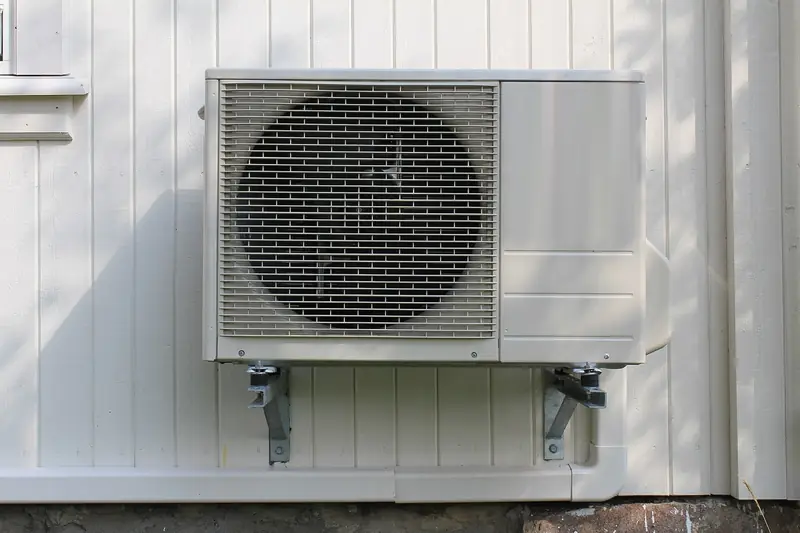
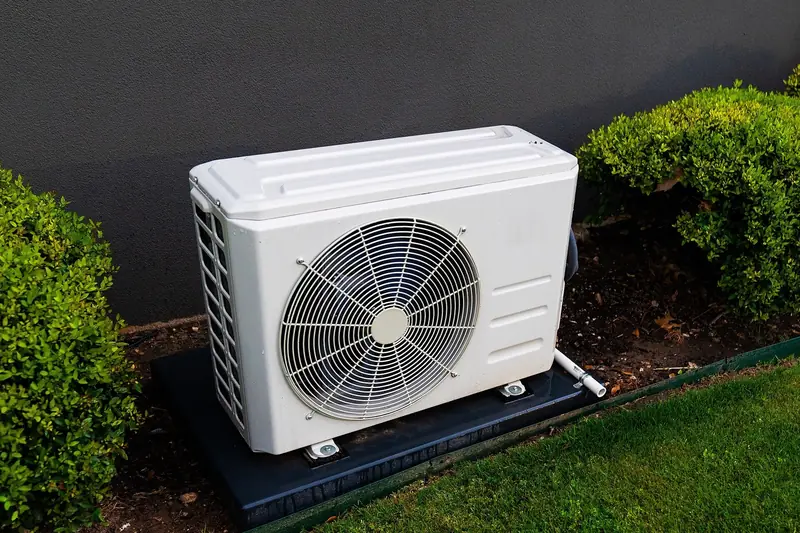
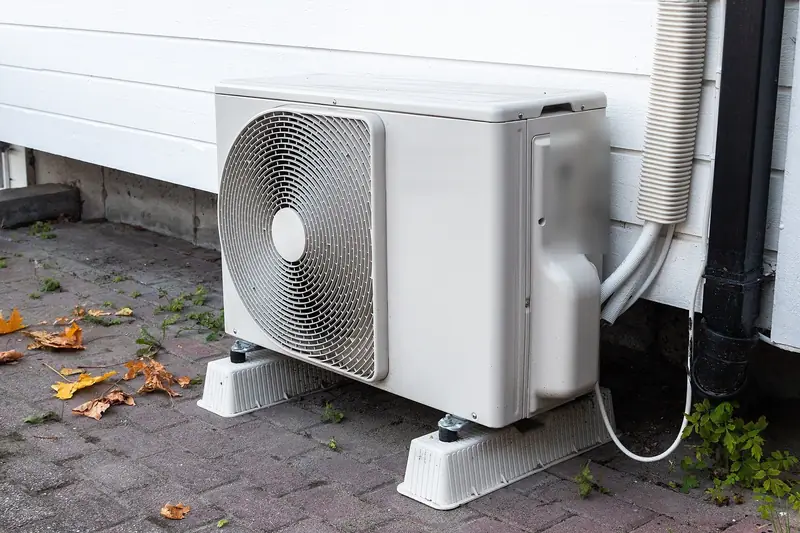
Ask for the numbers that make a unit cold-climate, in writing. Before you sign, work through the questions below. The installer specifies the equipment; the store card after them only shows what an outdoor condenser looks like, not a model to buy and fit yourself.
Questions for the installer
Is the model on NEEP's list?
Ask for its COP and heating capacity at 5°F, and whether it carries ENERGY STAR's Cold Climate designation.
What load did you calculate?
Ask for the design temperature used and the heating load in Btu per hour, and how much of it the system covers.
What happens to the old system?
Ask whether your rebate program allows keeping the boiler or furnace, and how the two will be controlled.
Are you a registered vendor?
Efficiency Maine rebates require an Efficiency Maine Residential Registered Vendor; ask the equivalent for your state's program.
Cold-climate numbers
- 1.75Minimum COP at 5°F, NEEP specification version 4.0NEEP
- 70%Share of 47°F heating capacity required at 5°F for ENERGY STAR Cold ClimateENERGY STAR
- -22°FTemperature many heat pumps still heat efficiently at, per Efficiency MaineEfficiency Maine
- 40%Household energy-use reduction DOE says cold-climate heat pumps can reach, at mostU.S. Department of Energy
- 100-115%Share of design heating load NEEP suggests for full replacement without auxiliary heatNEEP
Scaler's notes: how this page was put together
Built from NEEP's cold-climate specification version 4.0 and its sizing and selection sheet; ENERGY STAR's air-source heat pump criteria (version 6.2, revised February 2026); DOE's cold-climate article and its ORNL field-test summary; Efficiency Maine's heat pump page and heating cost calculator defaults of October 23, 2026; the NH Department of Energy fuel table of October 26, 2026; and one maker's published low-temperature claim, all read in October 2026. Left out: a generic "works down to X°F" figure, a switchover temperature, IECC zone numbers for these states, and any payback promise.
Questions from the woodshed
Do cold-climate heat pumps need backup heat in Maine?
Not always. NEEP describes systems sized to cover 100-115% of the design load with no auxiliary heat, and Efficiency Maine's whole-home rebates expect the heat pump to carry the house. Many households still keep a boiler for emergencies, which Efficiency Maine allows only as emergency backup.
What does HSPF2 mean on a cold-climate listing?
It is a seasonal heating efficiency rating. NEEP version 4.0 asks for HSPF2 of at least 8.5 for non-ducted units and 7.7 for ducted, alongside the 5°F COP test.
Does windchill affect a heat pump?
Efficiency Maine says its low-temperature figure holds regardless of windchill. What matters is the air temperature at your location, which is why its rebates use a design temperature for each project.
Is a cold-climate heat pump worth it in Vermont?
It depends on your fuel price, electric rate and house. Efficiency Vermont offers distributor discounts of $375 to $475 on ductless systems and $1,200 to $2,200 on ducted ones as of October 2026, subject to change; see the rebates page for the full list.
Can a heat pump replace an oil boiler that also makes hot water?
The heat pump handles space heating only, so you need another way to heat water if the boiler goes. New York's NYSEG and RG&E rebates cover replacing a furnace, boiler or water heater with eligible heat pump equipment.
Will my heat pump work during a power outage?
No. Heat pumps, like oil and propane boilers and furnaces, need electricity to run. The power outage page covers safe options.
How many outdoor units does a house need?
That comes from the installer's load calculation and the layout of the rooms. Efficiency Maine pays its rebate per eligible outdoor unit, up to a lifetime cap per housing unit, so the count also affects the rebate.
More on the switch